
Adil Talks
Adil Talks
Your Weekly Dose of Actionable insights and inspiring conversations!
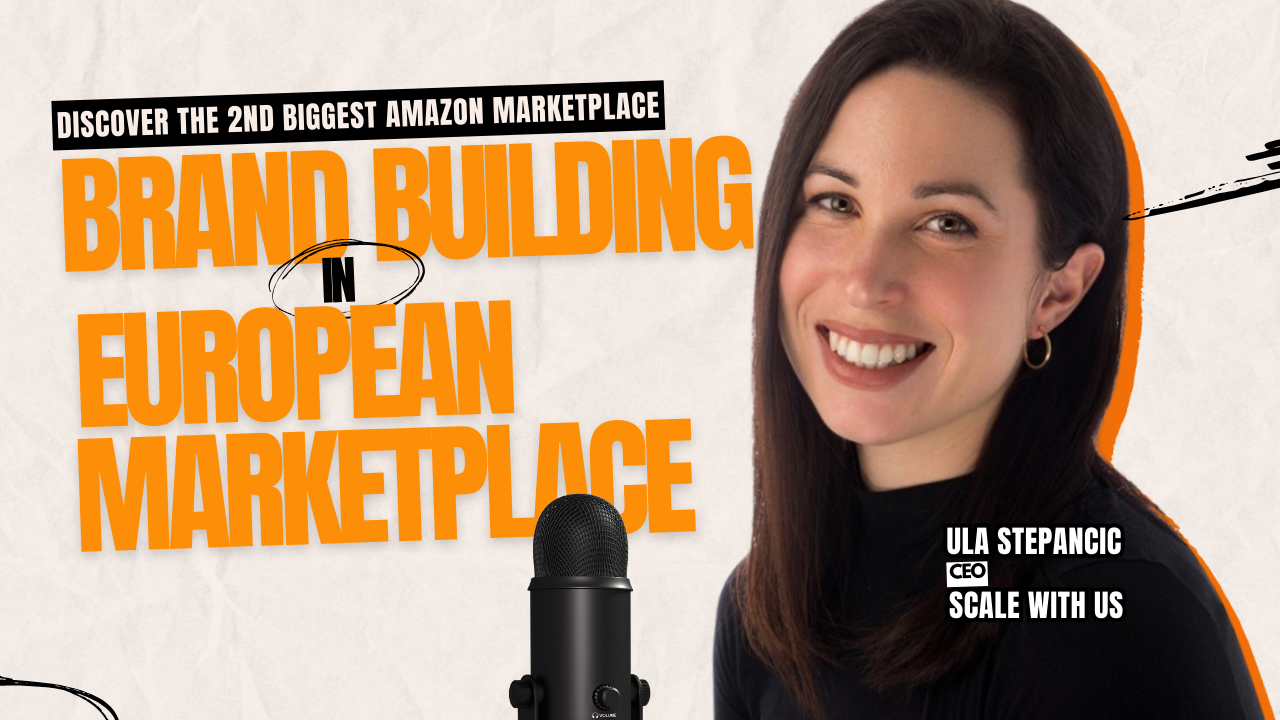
In this episode of Adil Talks 2.0, host Syed Zurriyat Adil interviews Ula Stepancic, a young entrepreneur from Slovenia who specializes in helping brands scale on Amazon’s European marketplaces. Ula shares her journey from managing customer support to running her own full-service Amazon agency, offering deep insights into the complexities of the German, Italian, and Spanish markets, and how localized strategies are the key to succeeding in Central Europe.
Five Key Points
1: Localization is Non-Negotiable: Ula emphasizes that simply translating listings is not enough. To truly connect with European customers, brands must localize everything—including text on images and A+ content. Using English images on an Italian marketplace, for example, signals a lack of effort and can drive customers away.
2: The Power of the “Corporate” Client: While Ula started with smaller startups, she highlights that working with established corporate brands is often more efficient. Corporates have defined processes, clearer goals, and higher retention rates, though managing them requires a more sophisticated communication strategy.
3: Germany’s Market Dominance and Strictness: Germany is identified as the largest marketplace in Europe (second only to the USA globally). However, it is also the most challenging. Ula notes that Amazon Germany has become increasingly strict with documentation and approvals, often declining valid invoices without specific feedback.
4: Strategy for New Sellers in Europe: For those entering Europe, Ula recommends focusing on one marketplace first (like Italy or Germany) to build reviews and history before expanding. She also points out that since Brexit, selling in the UK has become significantly more complex due to duties and shipping hurdles, making the EU marketplaces a more attractive starting point for many.
5: Cultural Fluidity in Business: Being from Slovenia—a small country of 2 million people—Ula speaks four languages (Slovenian, English, Italian, and Croatian). This multilingual background is a massive asset in the fragmented European market, allowing her to navigate different cultural nuances and business requirements effectively.
Final Takeaway
The “one-size-fits-all” approach does not work in Europe. Success on Amazon Europe requires a localized, patient, and persistent strategy. Whether it’s navigating the strict documentation of Germany or the cultural preferences of Italy, the brands that win are those that treat each country as a unique market rather than just a translation task.
Podcast Transcript
[01:48] Syed Zurriyat Adil: Hi Ula, how are you?
[01:50] Ula Stepancic: Hi, hi! I’m great, thank you. How are you, Adil?
[01:55] Syed Zurriyat Adil: I’m doing great. So can you introduce yourself?
[01:58] Ula Stepancic: Yeah, sure. So I’m a young entrepreneur from Slovenia, a small country in Europe. What I do is help clients get on Amazon, register their brand, their company, list their products, advertise for them, and also mentor some of them. So basically, full service for Amazon.
[02:21] Syed Zurriyat Adil: Awesome. So how long did you start it, and where did you get the idea to start an agency for people who are starting on Amazon?
[02:34] Ula Stepancic: When I was finishing my Master’s, Corona hit all of us. I decided I needed a student job because I had some free time. I decided to try my luck in KingsBox—it’s a Slovenian company in the fitness industry.
[03:00] Ula Stepancic: They wanted me to help them in customer support for Italy. After one month, they switched me to trying to sell on Amazon. We had to register their brand and company and put all their fitness equipment on all European Amazons.
[03:22] Ula Stepancic: I worked for KingsBox for two years, and then many Slovenian clients reached out to me for help with their Amazon. I saw the potential, and I always wanted to have my own company, so I just said, “Yeah, let’s go now or never.”
[04:23] Syed Zurriyat Adil: So you mostly have experience in the European market, right?
[04:31] Ula Stepancic: Yeah, mostly. I have some clients from the States, but mostly Europe.
[04:39] Ula Stepancic: I would say European markets are more strict than the American ones because we have different VAT numbers for each country if you stock in FBA. You have different demands from the countries and ministries.
[05:06] Ula Stepancic: It requires a lot of work—translations in all languages like Spanish, German, Italian, Swedish, and so on.
[05:25] Syed Zurriyat Adil: If someone is starting out, how should they start?
[05:33] Ula Stepancic: I always say to focus just on one marketplace first. Build that marketplace, have some reviews and sales, and then move forward. And always localize everything—the pictures, the content, the A+, the store.
[05:49] Ula Stepancic: Never have English images on the Italian marketplace because you won’t get close to customers. They will think you didn’t have the will to take care of their marketplace.
[06:19] Syed Zurriyat Adil: Is Amazon just fine nowadays, or do you recommend other marketplaces?
[06:27] Ula Stepancic: It depends on the company strategy, but Amazon is huge. I would definitely always say go on Amazon first. If you succeed on Amazon, you can succeed on other platforms as well.
[07:04] Syed Zurriyat Adil: Comparing Spain and Germany, how easy is that transition?
[07:16] Ula Stepancic: It depends on the product. I would say Germany is a bit more strict. For example, a food supplement company might need many more documents and approvals for Germany than for Spain.
[08:13] Ula Stepancic: What I noticed in the last few months is they are becoming more strict than ever with business owner documents and statements. They won’t allow you to start selling until you send everything.
[08:44] Ula Stepancic: They will decline documents that were correct in the past and won’t tell you what’s wrong. You just need to keep calm and keep trying. Maybe in half a year, you will be approved.
[09:12] Ula Stepancic: I think they are focusing on big, professional brands so there wouldn’t be any Chinese resellers or drop shippers. This is good for big brands that want to own their part of the market.
[10:47] Syed Zurriyat Adil: You studied Economics for your Bachelor’s and Master’s. How was that shift to customer support and Amazon?
[11:02] Ula Stepancic: In Slovenia, you get a lot of theoretical knowledge. In high school, I was doing jobs in marketing and sales, so customer support was not a big deal. I just needed to learn the processes and the products.
[12:00] Syed Zurriyat Adil: What is the good thing about Slovenia?
[12:09] Ula Stepancic: Slovenia is very small, next to Italy, Hungary, Austria, and Croatia. We have mountains, lakes, and the sea. It’s only 2 million people. It’s very calm and great to live here.
[13:09] Ula Stepancic: We don’t have our own Amazon. We normally order from Germany or Italy. I think we won’t have it for many years because we are so small.
[16:33] Syed Zurriyat Adil: If you were to start a product, which marketplace would you start from?
[16:39] Ula Stepancic: I would start in Italy because it’s the closest to us. Shipping to FBA is cheaper. Also, I think it’s important to know your customers and how to approach them with the right graphics and listings.
[17:23] Syed Zurriyat Adil: How do you approach translations for different marketplaces?
[17:32] Ula Stepancic: I normally prepare the listing or we do it together, and then I send the English version to the client. They usually have their own translators or agencies to do it properly.
[18:11] Ula Stepancic: Even if you succeed on one marketplace, you can’t think in an instant that it will work on all marketplaces without optimization.
[19:44] Syed Zurriyat Adil: Which country in Europe has the highest CPC (Cost Per Click)?
[19:55] Ula Stepancic: Definitely Germany. The German marketplace is the biggest one after the USA.
[20:13] Ula Stepancic: I think it’s harder to run in the UK now after Brexit. It’s doable, but there are higher costs, duties to pay, and the shipments are more complicated.
[21:14] Ula Stepancic: My clients usually get their stock in their own country first to check it and repack it for FBA. Quality control is a very big job. If you send directly from China, you have to be very sure about the FBA stickers, or Amazon will decline it.
[23:02] Syed Zurriyat Adil: What is your advertising strategy in Europe?
[23:13] Ula Stepancic: We always start with automatic campaigns and move to manual ones with keyword research from Helium 10. We use Sponsored Display and Brand, but it’s different for every company.
[24:50] Syed Zurriyat Adil: Is it better to work with new clients or corporates?
[25:03] Ula Stepancic: Corporates, definitely. They have established processes, they are big enough, and they know what they want. It’s much easier to work with them.
[25:24] Syed Zurriyat Adil: How do you do lead generation for your company?
[25:30] Ula Stepancic: Mostly word of mouth. You connect with people at events, someone recommends you, you get two big brands as references, and then you post case studies on LinkedIn.
[27:06] Ula Stepancic: I always post on LinkedIn in English. I want to reach foreign companies abroad rather than just local Slovenian ones.
[28:19] Syed Zurriyat Adil: How many languages do you know personally?
[28:23] Ula Stepancic: Slovenian, English, Italian, and Croatian. Four for now. We are small, so we always need to learn other languages.
[29:36] Syed Zurriyat Adil: How do you say thank you in Slovenian?
[29:41] Ula Stepancic: We say “Hvala lepa.”
[29:49] Syed Zurriyat Adil: And in Urdu, we say “Shukria.”
[30:04] Syed Zurriyat Adil: Thank you so much for coming on the podcast, Ula.
[30:11] Ula Stepancic: Thank you for inviting me. It was very nice and cozy to talk about these things.
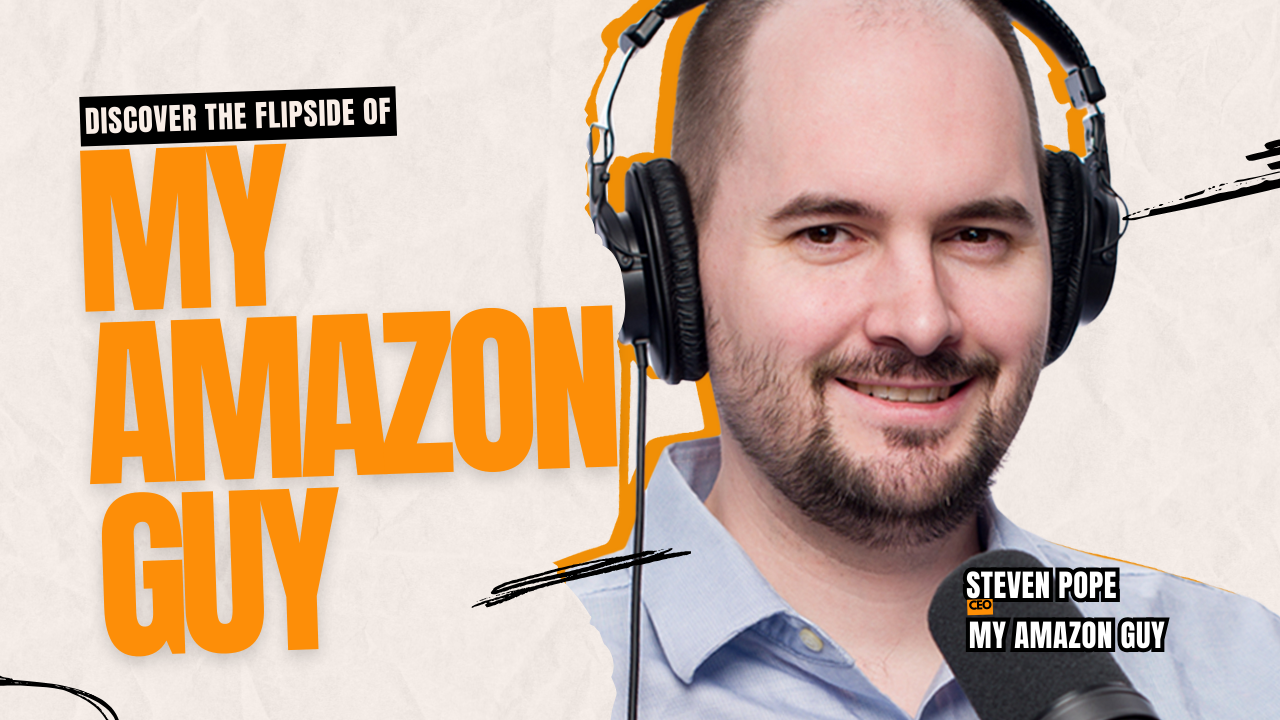
In this episode of Adil Talks 2.0, host Syed Zurriyat Adil interviews Steven Pope, the founder of “My Amazon Guy,” a $20 million Amazon agency with over 500 employees. Steven shares his journey from being a television reporter to building one of the largest Amazon agencies in the world, discussing high-level scaling strategies, the reality of client retention, and his unique “Us vs. Amazon” brand positioning.
Five Key Points
1: The Reality of Agency Churn: Steven openly admits that the average Amazon client stays for about 8.5 months. He argues that agencies shouldn’t fear this number; instead, they should focus on a robust acquisition model. He also suggests that if you haven’t lost a client in two years, you likely aren’t charging enough for the value you provide.
2: “Us vs. Amazon” Positioning: Rather than competing against other agencies, Steven positioned his brand as a collective front with his clients and even other agencies against the complexities of the Amazon platform. This allowed him to sell his SOPs and training materials to competitors, turning potential rivals into customers.
3: Strategic Talent Allocation: A core rule for his $20M scale was never putting expensive talent into “tactical” or “back-end” roles. He believes all high-cost employees must be client-facing or in leadership, while technical execution should be handled by lower-cost, high-efficiency labor.
4: The “Platinum Rule” of Leadership: Steven moves beyond the Golden Rule (treating others how you want to be treated) to the Platinum Rule: treating others how they want to be treated. He explains that this is the only way to attract and manage people who are smarter than you, as their motivations often differ from your own.
5: The Lead Gen “Quad” Strategy: Steven broke down his growth into four stages: referrals (to $1M), content/YouTube (to $10M), cold outreach (to $20M), and finally, paid ads (targeted for $50M). He emphasizes that while content builds the brand, outbound sales (cold calling) is a “trade secret” that significantly accelerated his mid-stage growth.
Final Takeaway
The most successful businesses aren’t just service providers; they are education-first entities. By making “My Amazon Guy” a hub for learning and SOPs, Steven created a flywheel where he trains his own workforce, builds authority through transparency, and creates a culture of meritocracy that attracts both top talent and high-value clients.
Podcast Transcript
[00:01:58] Syed Zurriyat Adil: Hi Steve, how are you?
[00:02:00] Steven Pope: Hey, doing good. Thanks for having me on.
[00:02:02] Syed Zurriyat Adil: Yeah, thank you so much for coming on the podcast. So would you mind introducing yourself for people who don’t know you? I doubt anyone doesn’t know you, but yeah.
[00:02:14] Steven Pope: That’s all right. Nobody actually cares who I am; they just care what I say. So it’s okay. But I’m the founder of My Amazon Guy. We’re a 400-brand agency, perhaps the largest Amazon agency in the world. We have over 500 employees around the world as well to help our clients. And so, I founded it about six years ago. I’ve been selling on the Amazon platform for over a decade.
[00:02:49] Syed Zurriyat Adil: Awesome, awesome. So I’m going to dive right into it and ask you… about a decade, that’s like 2014. So yeah, that was pretty easy to, you know, advertise. But how have you seen this whole dynamic change, especially after COVID?
[00:03:16] Steven Pope: We had a really good bump from COVID. It was interesting as an agency because in March of when COVID hit, I lost 30% of my whole business. One out of every three clients fired me in about two weeks. And then about two weeks after that, I gained 50% new clients.
[00:03:41] Steven Pope: What happened was all the big corporate retail box stores kind of just were like, “I’m out.” And then all of these native-born Amazon brands—the hustlers—they just started hitting hard.
[00:04:14] Steven Pope: Every problem that I experience running an agency can be tied back to people. It’s people, people, people. You need process and you need product, but 90% of my focus is on people.
[00:04:41] Syed Zurriyat Adil: I was saying that you have built a really good institute. The Learning Academy is really something in itself. How did you get started on that?
[00:05:05] Steven Pope: I like to joke that I actually run an education company that happens to be an agency. With that brand position in mind, no other agency is making that claim.
[00:05:23] Steven Pope: 67,000 people have applied to work at My Amazon Guy in the last two years. I realized there was this huge opportunity, and we launched MAG School almost two years ago.
[00:06:44] Steven Pope: I couldn’t hire 67,000 people yet, but I wanted to help the 66,500 people that I haven’t hired yet. That was my way of doing that.
[00:07:02] Steven Pope: A second thing we did is we started creating SOPs and started to sell those to the community. 40% of the people who bought my SOPs were agencies.
[00:07:23] Steven Pope: It says “Us versus Amazon” on my shirt. That’s a unique brand position. It’s not me against you, other agency; it’s all of us against Amazon.
[00:07:57] Syed Zurriyat Adil: When you have corporate clients, those are usually very steady. But you’re saying the hustlers are harder to maintain? How was that transition?
[00:08:57] Steven Pope: Agencies have a high-turn model. The average Amazon client will stay at My Amazon Guy for 8.5 months. Most agencies are scared to reveal that number.
[00:09:25] Steven Pope: With a high-turn model, if they’re only staying nine months, that means I have to replace my entire clientele once a year. That means you need to have a good acquisition model.
[00:09:43] Steven Pope: For those that don’t have a high turn, they may not be charging enough. If you haven’t lost a client in two years, chances are they’re taking advantage of you.
[00:10:41] Steven Pope: It’s not passive income. For the people who can build a brand, you can’t pull a profit out in the first year or two.
[00:11:41] Syed Zurriyat Adil: There is a pricing battle going on between agencies as well. What would you advise to agency owners?
[00:12:16] Steven Pope: If you win on price today, you will lose on price tomorrow.
[00:12:41] Steven Pope: I kind of reject the notion that there’s a pricing battle out there. I think the environment we’re all in together right now is so new, it’s the Wild Wild West.
[00:14:42] Steven Pope: Advice number one: don’t put any expensive talent into tactical roles as an agency. Your expensive talent should be client-facing or in leadership. No exceptions.
[00:15:25] Steven Pope: I try and do a modest retainer and a modest revenue share.
[00:15:39] Steven Pope: When I did high revenue share and low retainer, I’d grow them to millions of dollars and then they would fire me because they didn’t want to give me $20,000 checks.
[00:16:18] Steven Pope: You need to win those deals based on a value proposition. “Just trust me, the proof is in the numbers” is not a persuasive argument.
[00:16:44] Syed Zurriyat Adil: I think technical people should be taught to communicate with clients. How do you handle that in a 500-person company?
[00:17:43] Steven Pope: It’s a lot more difficult to do that than to hire somebody with zero experience who can communicate. The class clown is typically the better communicator.
[00:18:08] Steven Pope: Running a 500-person agency is not easy. I tried to build the agency around me and my personality.
[00:19:40] Steven Pope: I decided I was going to hire based on competency and merit because I hated being the guy driving results at my last companies and not being listened to.
[00:20:12] Steven Pope: Within the first 90 days of starting my agency, I was producing $43,000 in monthly recurring revenue.
[00:20:43] Steven Pope: One of the solutions I came up with was culture. I decided I’m going to wildly attract a cult following on core traits: learning, teaching, tech-savvy, and eagerness.
[00:21:43] Steven Pope: I started out as a television reporter, then went into e-commerce. Then I landed in women’s plus-size clothing and they did this thing called Amazon. I’m like, “What is this?”
[00:22:23] Steven Pope: Niche your services, not your product lines. Be as generic as possible on product niches, but your services need to be narrow and specific.
[00:23:46] Syed Zurriyat Adil: In the first 90 days you had $47,000 in revenue. How did you keep that momentum until $20 million? Most people would say “this is enough.”
[00:24:29] Steven Pope: High-drive people—it’s never enough. I was comparing myself against world-renowned people like Elon Musk.
[00:25:09] Steven Pope: I want to be able to make substantial impacts. I want the system I’m building today to outlive me.
[00:26:54] Syed Zurriyat Adil: What is needed to take it to 1,000 people?
[00:27:18] Steven Pope: Leadership is the key. The thing I have failed to do by 2024 is hire enough leadership to replicate me.
[00:27:48] Steven Pope: I do not believe most people can manage more than eight direct reports at any given time. Right now, I have about 70 people that directly report to me. It’s not a good thing.
[00:28:57] Steven Pope: You want to know how to grow a business? Ask the customer, “What do you want?” Give it to them. Then ask, “Did you get what you wanted?”
[00:29:53] Syed Zurriyat Adil: Most of your following is from Pakistan. A couple of years ago you said Pakistanis are hungry, but then that changed. What happened in between?
[00:30:32] Steven Pope: Pakistan is the most eager country in the world when it comes to Amazon. At the same time, there’s a lot of challenges.
[00:31:03] Steven Pope: I created an international row that was not a good situation. I would not do it again. I could have said it a lot better. The intent was to help, but it didn’t come across well.
[00:32:39] Steven Pope: It’s simply going to take time. A lot of people who enter the space need a job, so they feign experience and knowledge. That’s the problem.
[00:33:02] Steven Pope: If someone says, “I have no experience but here is my tenacity,” I hire that person more frequently than the guy who says, “I can do everything.”
[00:35:45] Syed Zurriyat Adil: When are you coming to Pakistan?
[00:35:58] Steven Pope: I chose to invest more in the Philippines than I did in Pakistan and I’m making my home base there. That’s not going to change.
[00:36:26] Steven Pope: I feel like the Filipino culture is easier for me to personally integrate with the American culture. It was a business decision.
[00:36:51] Steven Pope: I have zero employees in India. Our Pakistan number is down to six at My Amazon Guy. In the Philippines, we have more than 400.
[00:37:37] Steven Pope: I basically forced our recruitment team to focus on the Philippines. I wanted a single-based culture unit.
[00:39:07] Syed Zurriyat Adil: What was the story behind the Lamborghini?
[00:39:17] Steven Pope: I went to lunch with agency owners and they were all driving Lambos. I asked why, and they said, “Because it leads to more business.”
[00:39:41] Steven Pope: The first place I took it was to the UPS Store to drop off an Amazon package. The guy said, “Do you sell on Amazon? Can I buy your course?” He didn’t know who I was, he just saw the Lambo.
[00:39:59] Steven Pope: The Lambo actually got totaled. I didn’t like it that much, so I picked up an Audi R8. That’s what I drive today.
[00:41:40] Steven Pope: I’m not a car guy. I drove a 2008 Mazda 3 up until two years ago. I don’t care about status.
[00:43:04] Steven Pope: I type 108 words per minute. I’m able to shout a bunch of orders. I’m a dreamer and a visionary.
[00:44:40] Steven Pope: John Aspen was not an influencer before he joined My Amazon Guy. I created him in a sense. He took a job with PickFu, and I’m very happy with my investment.
[00:45:34] Steven Pope: The risk is that some people you invest in will move on, but it’s better for everybody involved.
[00:46:46] Steven Pope: I live by three rules: The Silver Rule, The Golden Rule, and The Platinum Rule.
[00:47:11] Steven Pope: The Golden Rule is treat others how you want to be treated. The Platinum Rule is treat others how they want to be treated.
[00:47:26] Steven Pope: You cannot attract people smarter than you if you don’t use the Platinum Rule.
[00:48:12] Syed Zurriyat Adil: How has lead generation changed from the start until 2024?
[00:49:37] Steven Pope: There are four ways to acquire leads. Referrals got me to $1M. Content got me to $10M.
[00:50:18] Steven Pope: What got me to $20M is when I started cold outreach—emails and cold calling. I have a 20-person outbound sales team.
[00:50:45] Steven Pope: Paid ads is the fourth quad. That’s how I plan to get to $50M. It’s the most expensive but it’s working.
[00:51:39] Steven Pope: I have a 26% conversion rate from meeting to contract.
[00:52:23] Steven Pope: I think conferences are overrated. You don’t need a conference to learn how to sell on Amazon.
[00:55:08] Syed Zurriyat Adil: Do you have any closing remarks?
[00:55:15] Steven Pope: My favorite business book is The Road Less Stupid. It helps you prevent bad decisions by simply thinking.
[00:55:22] Steven Pope: My biggest mistake was a $2 million investment into the SAS world. I tried to build PBC automation software and everybody hated it.
[00:56:19] Steven Pope: The lesson is: stick to what you know.
[00:57:32] Syed Zurriyat Adil: It was really nice talking to you, Stephen. Thank you so much.
Ready to Join the Conversation?