Click the link, hit play, and Prepare to Level Up.

Place where the strategists, the innovators, and the game-changers come to share their stories, strategies, and insights to help you scale smarter, faster, and better.

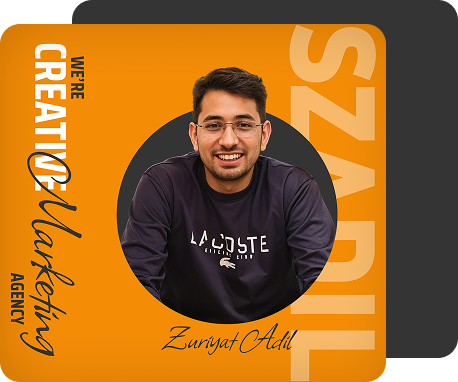
Hosted by Syed Zurriyat Adil

The voice
behind SZAdil

If you’re tired of listening to the same recycled advice and want to hear from the people actually making things happen, you’ve found your spot.


The SZAdil Podcast is about real talk, actionable strategies, and stories from the people who have done it all.

In this series, Syed Zurriyat Adil takes the mic to discuss the latest trends in digital marketing, business growth, and eCommerce success.

Agency Growth

Scaling a $ 20-mil Agency | Inside My Amazon Guy's Winning Strategies | Steven Pope on Adil Talks

$20M blueprint, 400+ clients, and relentless systems. Steven Pope shares how My Amazon Guy became a powerhouse. Client acquisition, lead gen, and agency DNA revealed.

Listing Expert

Amazon Sellers: Bad Product Listings KILL Your Sales. [Fix Them NOW] | Ft. Danan Coleman | Ep. 46

Traffic means nothing if your listings suck. Adil & Danan talk AI, Amazon search, future trends, and why Catalogue Defender could change everything for sellers.

Amazon Logistics

Why Australia is the Best Market to Launch Your Product in 2025? | Ft. M. Ebaad Ali | Ep. 37

Ever juggled business, studies, and a foreign life? Ebaad Ali unpacks the expat entrepreneur’s story with Adil; culture, hustle, balance, and breaking global ceilings.

Wholesale Scaling

How to Measure KPIs for You, Supplier & Brand are Profitable? Ft. Corey Ganim | Ep. 33

10M+ in sales. Corey & Adil expose key Amazon Wholesale mistakes, top KPIs, scaling secrets, and how not to sell headache products. Pure growth fuel.

Amazon Advertising

Crack the Amazon Code with Mike Frekey | Top Seller Strategies Revealed for 2024 | Adil Talks

Mike Frekey reveals why top Amazon advertisers avoid launching on Amazon. Mind-blowing insights, mindset gaps, and strategy shifts in this bold Adil Talks episode.

Amazon Wholesale

95% of Amazon Success Hides in Product Research? Ft. Eric Castellano | Ep. 27

Amazon’s changed fast! Eric Castellano breaks down 11 years of evolution, wholesale hacks, and why TikTok Shop sellers are pocketing $60K+. Growth game decoded here.

Celebrating the powerhouse women who are shaking up the business world. From Amazon to Advertising to Marketing, this series features the voices of women who lead with confidence, vision, and purpose.

Brand Designing

How to Find Your Skill? | Women Who Lead | Ft. Zeba Mirza | Adil Talks | Ep. 1

Zeba Mirza’s journey from discovering her passion for visuals to founding The Dezine Hive showcases the power of persistence. Listen to her story of creative success and empowerment.

Personal Branding

How To Build A Personal Brand In 2025 | Women Who Lead | Ft. Javeria Zafar | Adil Talks | Ep. 2

Javeria Zafar shares how women can sell their skills, build a personal brand, and overcome challenges. A conversation on growth, perseverance, and taking charge of your career path.

LinkdIn Ghostwriting

How To Know Your Worth As Service Provider? Ft. Taiba Anwer | Women Who Lead | Ep. 03

Building your personal brand is key! Taiba Anwer and Syed Zurriyat Adil dive into documenting your work, LinkedIn ghostwriting, and why empowerment is vital in today’s job market.

Amazon Branding

What is the North Star for every Amazon seller? (Hint: It's NOT Sales) Ft. Carly Mcmillen | Ep. 04

PPC Farm helps Amazon sellers with much more than sales! Carly McMillen talks about Amazon branding, the importance of inventory, and what drives revenue. Key insights for success!

Social Media Management

How To Build Your Audience In 2025? Ft. Lovely Dutta | Women Who Lead | Ep. 05

In 2025, your social media profile is your biggest asset. Lovely Dutta shares strategies on how to update and leverage your social presence to stay ahead in a digital world.

Amazon PPC

Will Amazon's 2025 Experiments Change The E-Comm Game? | Ft. Noemi Bolojan | WMH | Ep. 06

Is PPC everything? Do core values matter? When should you scale an agency? Can any product be sold on Amazon? Noemi Bolojan dives deep into these questions!

In this series, we tackle the biggest challenges faced by eCommerce sellers on Amazon. Adil brings in top experts to discuss winning Amazon strategies that you can implement right away.

Amazon Strategies

Amazon vs. Noon | Decoding the UAE Marketplace for Private Label Success in 2024 | SZAdil

Roshan Malik shares her experiences as the founder of Digital Maverix. Insights into Dubai’s marketplace, Amazon vs Noon, UAE’s weather impact, dropshipping, and strategies for Amazon success.

Amazon ads

Find Your Dream Job & Boost Your Earnings | Income Accelerator | 90-Day Roadmap | SZAdil

Tehsin Rashad discusses his book Income Accelerator, offering a blueprint to unlock success in 90 days. Valuable insights on Amazon ads, upskilling, and professional growth strategies.

Amazon PPC

Amazon PPC Mastery Guide for Brand Building in 2024 | The Amazon Solutions Podcast with SZAdil

Elizabeth Greene, co-founder of Junglr, shares strategies for Amazon PPC success. She covers keyword mastery, campaign optimization, and how her agency accelerates 7-figure brands to 8-figure ambitions.

Amazon Manager

Cracking the Code to Client Retention | Secrets for Securing High-Ticket Clients in Freelancing

Umar Siddique reveals his strategies for acquiring high-ticket clients as an Amazon manager. Insights into client retention, effective communication, and navigating the world of Amazon freelancing.

Amazon PPC

Turning Clicks into Cash with Amazon PPC Strategy | Client Hunting through Upwork and LinkedIn

Hiba Awais shares her freelancing journey, offering tips for standing out on LinkedIn, mastering Upwork, and breaking down Amazon PPC strategies for business and career success.

Digital Marketing

Buyer's Psychology through the lens of Certified Performance Marketer | ASP with SZAdil | Ep.13

Zohaib Raja discusses the future of digital marketing, focusing on ad triggers, buyer psychology, course selling, and the role of AI in simplifying the advertising landscape.
In this series, Syed Zurriyat Adil takes the mic to discuss the latest trends in digital marketing, business growth, and eCommerce success.

In this episode of Adil Talks 2.0, host Syed Zurriyat Adil interviews David Seybert (formerly of Thrasio), an Amazon growth expert and brand builder. David discusses the critical importance of conversion-focused creative, the common pitfalls that caused major Amazon aggregators to struggle, the shift toward omni-channel strategies in 2026, and how to navigate the overwhelming number of new tools and automation features on the platform.

Five Key Points

1: The Aggregator Fallacy: A primary reason many Amazon aggregators failed was treating brands like passive real-estate investments. David explains that Amazon brands require “special love” and niche community management (like Facebook groups) that doesn’t always scale well when rolled into a massive corporate structure. [06:58]

2: The “Conversion Pitch” Priority: Many sellers focus so much on traffic that they neglect their sales pitch. David managed to maintain a 25-30% conversion rate with fewer than 100 reviews by obsessing over creative assets that answer customer questions immediately, which ultimately saved him thousands in advertising costs. [09:29]

3: Combatting “Shiny Object Syndrome”: With Amazon launching constant updates and new ad placements in 2025/2026, brand owners often get overwhelmed. The advice is to ignore the noise and pick just three core things to do exceptionally well rather than trying to use every new automation tool. [04:33]

4: Social Media and “Brain Rot” Humor: The hosts discuss how traditional corporate language is failing. Brands that embrace Gen Z “brain rot” humor or meme culture are often outperforming sophisticated competitors because they build a human connection that bypasses the standard sales funnel. [30:27]

5: The 2026 Omni-channel Shift: While Amazon remains the dominant sales channel, 2026 is the year for brands to go omni-channel. This isn’t just about sales, but about building an audience and a reputation that exists independently of Amazon’s search bar. [20:11]

Final Takeaway

The most successful Amazon brands in 2026 won’t just be those with the best PPC strategy, but those that treat their product page as a high-stakes sales funnel and their customers as a community. Success requires moving past the “Amazon-only” mindset to build an audience on platforms like TikTok or Walmart, ensuring your brand remains a destination rather than just a search result.

Podcast Transcript

[02:24] Syed Zurriyat Adil: Hi Dave, how are you doing?

[02:26] David Seybert: Good.

[02:27] Syed Zurriyat Adil: So like Dave, when we started talking, we were talking about the year and you know this has been, I think this has been kind of a recovering year for the Amazon space. Like what do you think? I think Amazon is recovering right now as opposed to 2024.

[02:46] David Seybert: I think yeah, it seems this year still a lot of new brands coming into the space making a splash in a totally different way. 2025 definitely evolved a lot with the tariffs and all that. It started out a little shaky but overall, I mean it was a good year with traffic and I had noticed a lot of new developments. Amazon’s pushing a lot of new changes. So it seemed like there was a fair bit of announcements in 2025.

[03:23] Syed Zurriyat Adil: Yeah, I think it was too many announcements. Like every day you come in and you see they have, I think in 2024 they were just focused on making it visually better, the whole advertising console and stuff, and this year they were like “Okay you get videos” and then “You do this” and more automation and more placements. You might have seen the sponsored product video placement which is still a weird concept for me, but it’s out there. So I’m testing it out as well, but I’m like, where does it stop? Where do they stop?

[04:08] David Seybert: I don’t think Amazon has a stop button. I think as a brand it’s very easy to get overwhelmed of like, okay should I be on TikTok Shop or should I be running these new AMC audience ads? For a new brand it can be way overwhelming to figure out what do I actually need to do and cut through all the noise of like what are the five things that are critical that I should do for my first year or two or three years in business on Amazon. Because you’re just thrown all the shiny objects. Really you don’t need to do everything. You just need to do a couple things well and then build one thing at a time onto your business. But any e-com brand owner that’s started in the past couple years probably can relate to that of just like, there’s a million things that you could do in theory to push the business, but you have to choose like three.

[05:00] Syed Zurriyat Adil: Yeah, that’s right. And I have this, one of our guys in here is like a marketing guru and the thing is he doesn’t use advertising at all. He’s more of a virality guru. Whenever we are talking to him, I’m like “I spent like 100k in ads this month” and he’s like “I can actually get you this much ROI without running any ads.” And I’m like, yeah this is a whole different game. But for an e-commerce seller they have to look at everything and then they have to choose one because each thing is so different. It’s a very weird game out there. So Dave, you were I think the first marketing hire at Thrasio, so you have seen a lot of that life as well. In the start, the whole aggregator space was very exciting and fast-paced, and then it kind of went all over the place. I want to talk a little bit about that but I’m not sure where to begin because so many things happened within that.

[06:19] David Seybert: Yeah, and I think when you’re looking at the aggregator space, so I spent almost four years at Thrasio and was in at the very beginning when they had three or four brands that they owned and saw them scale up to a thousand employees and maybe 250 brands by the time that I left. And the key thing about aggregators, why they had such a hard time, is because managing an Amazon business takes like a special love. It’s a different skill set. And a big reason why I think a lot of them failed was they looked at it like an investment vehicle, like real estate, but didn’t realize all of the niche things that go into each individual brand—like Facebook groups of people that refer you and talk about you. Every little brand is operating in this niche and you can’t just roll them up and say “Oh this is a piece of real estate on Amazon” because a lot goes into maintaining that placement on page one.

[07:30] Syed Zurriyat Adil: Yeah. The supply chain is the first thing that collapses and it’s the first thing that if you do it right, it saves you a lot of profit as well. So I understand it became such a giant mammoth and it’s very hard to control. But at the same time Dave, you yourself have launched and ran a successful top brand in the home goods niche. What do you think was the one piece of thing that you did right? The thing that stood out or saved you money?

[08:39] David Seybert: I think investing a lot in creative early on of nailing the sales pitch. Having a great product is usually what most successful entrepreneurs can do really well, but sometimes you focus so much on that that you forget to sell it. People crush it by having a very lackluster product but they sell it super well. You see this a lot in the supplement niche. People don’t spend enough time laboring over the sales pitch and just testing, testing, seeing how people respond. So I spent a lot of time early on building that sales pitch. So my conversion rate when I had under a hundred reviews was 25-30%. Really high conversion rate. And so now I’m not killing myself on traffic because traffic’s so expensive on Amazon nowadays. If I converted at 5% or 10%, I’d be… yeah.

[10:00] Syed Zurriyat Adil: No, that actually makes a lot of sense. I was having this talk with a friend yesterday. He wanted to start a game development company. And I told him you have to go into either building a really good game like GTA 5 which takes a hundred million dollars, or you can create an educational game for kids and market it to parents. Because every kid has an iPad now, that is way easier and less expensive than creating a high-end game. So it’s very important to nail who is going to buy it and why.

[11:42] David Seybert: Yeah. A lot of Amazon sellers fall into one of two buckets. One is there’s already an existing idea and you’re making it better, and the other one is something entirely net new to the platform. Both have their own challenges. When you’re launching into a niche that already exists, it’s hard to conquest traffic because people are used to buying product A. You’re saying “Don’t buy product A anymore because mine does this.” And then the other bucket is creating something entirely new—a problem no one solved before. Nobody even knows to search for that. So both you have to have a really strong sales pitch. Amazon’s a small detailed page. People don’t go on there and explore and read a bunch. They type a keyword. So you have to tell a story that’s quick and powerful. I see a lot of listings that try to say too much. Amazon, you got to nail that click and then it needs to be more like a sales funnel. Conversion pitch is what we call it.

[13:26] Syed Zurriyat Adil: Yeah, tell me more about conversion pitch because I never thought about it this way. I usually think the main image is everything and the rest are just compliments.

[13:41] David Seybert: Yeah, the main image you can do a lot with depending on what niche you’re in. But some niches you’re not really able to tell the whole story. Take for example a teak shower bench. It’s not like you can tell that much of the story from the main image because it’s furniture. You just kind of put the item in there. But you have to be able to say “How are we different from the competitor that’s low quality” with just the main image. Then when you get to the detail page, capturing the sale by saying “This is us versus them,” difference in quality. But yeah, main image is where you get the most eyeballs.

[14:40] Syed Zurriyat Adil: Yeah, so the click needs to happen there. I remember I was going through hair serums because I had hair fall. There was this one where there was a man with really long hair and the bottle right beside him. This is where I stopped scrolling. I was sold because it was so funny but it actually made sense. The hair is long because it’s not falling.

[15:45] David Seybert: Yeah, and I think you can look at it kind of from an ads perspective. Before I was doing Amazon, I was doing Facebook ads. With Facebook ads, the purpose of the ad is to get the click. That’s all you’re really thinking about. I need to get the traffic and make sure that the traffic’s directionally ready to convert. CTR is everything with that main image. The way I’ve always thought about it with Amazon is the main image should directionally get you high-converting traffic, but it should be optimized to get the click. And then your detail page is what you have to perfect to close. It should be quick. If someone has to scroll around your page or they have questions and you’re not hitting them and answering, then your detail page isn’t really doing what it’s supposed to do.

[17:10] Syed Zurriyat Adil: That actually makes sense. So Dave, there are other platforms like TikTok Shop and Instagram and Walmart. What do you see in 2026? Do you think there’s going to be a shift in how brands start building? I’m seeing brands building outside of Amazon first and then coming into Amazon to get natural organic traffic.

[18:13] David Seybert: Yeah, and I think for 2026, I would have a different answer if you’re an established brand versus if you’re launching a brand in 2026. I think it’s all about audience. If you’re building a product that is not just a “me-too,” you should be thinking about where you build that audience. Building an audience through just operating an Amazon brand is nearly impossible. You should be thinking about social media, newsletters, or even live events. And if you’re an established brand doing millions of dollars, I would say 2026 is the year for the omni-channel strategy. People are still shopping at Amazon in majority, but many prefer other channels and Amazon is not an exploratory platform. People search, find, and buy.

[21:11] David Seybert: Back in 2017, I worked with a guy who invented a chicken feeder. You just drill a hole in a five-gallon bucket and screw this thing in. On Amazon, it just looked like a piece of PVC pipe. Nobody knew what it was. We had to do a ton of video ads and the main image had to show it on the bucket with chickens eating. Our first year it did a quarter million. But the main thing was engaging with chicken owners. That first year has to be very scrappy. Reaching out through social media, creating Facebook groups, sending out product samples. You just have to take every milestone as a win.

[23:47] Syed Zurriyat Adil: Yeah, that has a lot of struggle. And what’s your opinion on starting Amazon as a side hustle versus a main thing?

[24:41] Syed Zurriyat Adil: I think Amazon is a full-time thing. If you go all in, you get results faster and you understand faster as well. If your product is bad, you find out in 3 months and can go back to what you were doing. If you keep it as a side hustle, you slowly drain everything and in the end, if it doesn’t work, you’re just disappointed.

[25:35] David Seybert: I go back and forth on this. If you don’t know Amazon and you hire marketers, that’s one scenario. But if you’re a DTC owner launching on Amazon, it probably makes sense to have that be the core focus. It needs a lot of love. There’s five major things brand owners should consider now—sponsored product video, AMC audiences, etc. To succeed, you’ve really got to be on the ball. You can’t just check in a couple hours a week.

[27:11] David Seybert: Launching a brand this year, you have to do so much more. It’s not just traffic, conversion, and PPC anymore. I would add external traffic and then audience and engagement. Your customer shouldn’t just be a transaction. You need an engagement strategy.

[28:38] Syed Zurriyat Adil: I think for the 21st century, everybody realized these audiences are humans and we need a connection. I think meme culture played a lot of role in that. Corporations have started being more social media friendly because they understand people respond to that.

[29:28] David Seybert: Yeah, social media engagement and AI are the skill sets that have taken off the most. But as a business owner, I have no interest in making memes and posting. How would you advise someone like that?

[30:08] Syed Zurriyat Adil: I think get somebody from your family who “speaks memes” and just give it to them. There is a cookie company in my city and their whole thing is “brain rot” humor. Their cookies are terrible to be honest, but they were the first ones to do it and now they have branches all over the country.

[31:08] David Seybert: It’s an interesting strategy. That’s good for getting eyeballs, but then there’s the deeper level of strategy of converting those people. You can’t force that audience to be a conversion funnel for you; it’s more just a set part of your strategy.

[33:00] Syed Zurriyat Adil: Dave, if you launched a brand in 2025 and are expanding in 2026, what platform after Amazon is the most important to be on?

[33:18] David Seybert: I think TikTok. For my product type, it’s a niche that still needs to be educated. TikTok is good for exploratory building and awareness. It’s relatively low lift—just content and volume output. After that would be Walmart. For my niche specifically, it’s a commodity type product.

[34:39] Syed Zurriyat Adil: I’m going to argue that Walmart is important for everybody. If you get your product placed there, it helps you. Even if physical stores are closing, people still love to go out and look at stuff. Maybe six months down the line they see your product and remember it.

[35:58] David Seybert: I like Walmart. I worked with a top hundred seller doing 100 million a year on Amazon. They had products on Walmart too, but the traffic and revenue were just not comparable. However, I like your point about online reputation. If you’re on Walmart and Amazon, you’re everywhere. I will say certain brands stay away from Walmart because they want to keep their brand image a certain way.

[37:48] Syed Zurriyat Adil: Yeah, that makes sense. I never considered that point.

[37:51] David Seybert: That’s what held some DTC brands back from Amazon too, but now Amazon is just a sales channel. Even if you don’t show up there, someone else might sell your product. I actually just posted on LinkedIn about a new Amazon AI program with North Face where the AI goes to their store, buys it for you, and ships it using your Amazon info so you don’t even leave the app.

[39:03] Syed Zurriyat Adil: That’s good. I once wanted to buy a laptop and I went to the Asus website instead of Amazon because I thought a big transaction should be on a “safe” checkout page. I had to wait 5 days. I should have ordered on Amazon and got it the next day. Now I do all big transactions on Amazon.

[39:41] David Seybert: People are just used to the Amazon UI. If they have a return, it’s very simple.

[39:52] Syed Zurriyat Adil: Yeah, the return is very simple. Dave, thank you so much for taking the time out. I understand it’s near the holidays. Thank you for coming on the podcast. Do you have any closing remarks?

[40:29] David Seybert: No, if you want to connect with me, LinkedIn is the place. Thanks for having me on and happy holidays.

[40:41] Syed Zurriyat Adil: You too. Take care. Bye.

[40:45] David Seybert: See you.

In this episode of Adil Talks 2.0, host Syed Zurriyat Adil interviews Mark Greening, an Amazon strategist and e-commerce expert. Mark shares deep insights into the mechanics of Amazon’s ecosystem, focusing on cash flow management, the psychology of “consumable” branding, and how AI like Amazon’s Rufus is changing the way customers search for products. Here’s the breakdown of the conversation:

Key Discussion Points

1: The Replaceability Trap: Mark warns that Amazon is a demand-driven machine that doesn’t care about individual sellers. If a billion-dollar brand gets suspended, Amazon’s revenue barely flinches because the demand simply shifts to the next available seller. This makes account health and compliance a survival priority.

2: The Power of Consumables: Mark advocates for brands with repeat purchase cycles (like pet supplies or beauty). It is significantly more profitable to sell to the same customer 12 times a year than to find 12 new customers for a one-time purchase.
3: The Hidden Metric (Stock Turnover): Many sellers focus on sales volume, but Mark emphasizes “Inventory Turn.” Money sitting in a warehouse is “dead money” that can’t be spent on growth. A product that turns over quickly is often more valuable than a high-margin product that sits on shelves.
4: Predicting Demand vs. Chasing It: Supply chain management isn’t just about ordering more; it’s about calculating “lead times” (factory to 3PL to Amazon). Mark suggests using simple dashboards to visualize when you must place an order to avoid stocking out during critical windows like Q4.
5: The Shift to Conversational Search: With the rise of AI assistants like Rufus, customers are moving away from typing short keywords and toward asking complex questions. Sellers must optimize their listings to answer “problems” rather than just stuffing keywords.

Final Takeaway

The most resilient Amazon businesses are those that treat cash as oxygen and customers as problems to be solved. Success isn’t found in a single “hero product,” but in a diversified portfolio that prioritizes high inventory turnover and adapts to the new conversational AI search landscape.

Transcript

[00:01:10] Syed Zurriyat Adil: How do you make your brand rock solid for the upcoming years? For a seller, that is the most important thing.

[00:01:56] Syed Zurriyat Adil: I have seen many situations where Amazon suddenly blocks an account because of a brand or patent infringement. On one side you have competitors copying you, and on the other, Amazon can be so restrictive that it gives a monopoly to one brand in a category.

[00:02:44] Mark Greening: I see many posts like “Amazon closed my business, don’t they understand how much sales they are losing?” The truth is, demand on Amazon is constant. If you disappear, someone else takes those orders. Amazon can close sellers worth billions and won’t feel a difference in revenue. It is scary how replaceable we are there.

[00:05:10] Mark Greening: My first brand was a pet brand—shampoos, ear cleaners. I always cared about the repeatability of purchases. It is much easier to sell the same product 12 times to one customer than to find 12 separate customers. Later I entered the beauty industry, but I backed out because it became too ruthless and toxic.

[00:07:43] Mark Greening: The value of a business is not about relying on one flagship product. It’s about having a portfolio, selling on multiple marketplaces, and also outside of Amazon, like on your own Shopify. These are factors often forgotten when building a company with a later exit in mind.

[00:10:16] Mark Greening: The difficulty in running a business is wearing many hats at once. You have to be good at numbers, managing people, sales, and creativity. Usually, these traits don’t go together in one person. As a solopreneur, you often feel imposter syndrome because you don’t handle some areas well. My advice: if you can afford it, outsource the areas where you are weak.

[00:13:41] Mark Greening: A metric that people should monitor, and they don’t, is stock turnover. If you have two products generating the same amount of sales, but in product A you freeze $10,000 in stock and in product B $20,000, then product A turns stock into cash twice as fast. Money frozen in the warehouse is money you cannot spend on advertising or development.

[00:16:52] Mark Greening: Demand management is difficult because it has many moving parts. We use simple dashboards that consider historical sales, seasonality like Q4 or Mother’s Day, and lead times—for example, 6 weeks from the factory plus 3 weeks from the 3PL warehouse to Amazon. It doesn’t have to be complicated; a spreadsheet with 5 or 6 columns that tells you, “You must order stock on this day, otherwise you will run out.”

[00:22:45] Mark Greening: I see the future of AI in e-commerce like this: AI will take over basic service levels—customer service centers, chatbots, or data analysis. However, premium services will belong to humans. People will crave interaction with a real person. AI is brilliant at analyzing thousands of rows of data in a fraction of a second and drawing key conclusions, which allows us experts to better advise clients.

[00:30:44] Mark Greening: Clients don’t think in keywords. Clients look for solutions to their problems. If I have a dirty, smelly dog, that is my problem. The solution is shampoo. With the introduction of Rufus, people are increasingly typing questions instead of phrases like, “What shampoo will be best for a dog with itchy skin?” As sellers, we must start thinking like the buyers and not just focus on the rigid metrics of SEO tools.

[00:35:44] Mark Greening: Often we are happy that sales grew by 10% in a month. But if the whole market grew by 20%, then in reality you lost 10% market share. That’s why I obsessively follow the numbers—they tell a story you won’t see looking only at your own sales bar.

[00:40:05] Mark Greening: The job of the first photo is to get the click. The job of the listing is to convert the browser into a buyer. These are two different stages. Additionally, the purchase path is rarely linear. A client might see an SP ad, then DSP, come back in three days, and only then buy. AI helps us understand this chaos and link advertising spend with real profit.

[00:49:07] Mark Greening: Stay up to date with trends—not just technological ones, but general changes in how people shop. Understand how the behavior of a client sitting on a bus with a phone in their hand is changing. If you don’t have time for that, collaborate with someone who keeps their finger on the pulse and helps you fix mistakes before it’s too late.

[00:49:36] Syed Zurriyat Adil: Thank you so much for coming here.

[00:49:38] Mark Greening: Thank you, it’s been a pleasure.


In this episode of Adil Talks 2.0, host Syed Zurriyat Adil interviews Shane Barker, an Amazon and digital marketing expert and the founder of Tracefuse. Shane discusses the critical importance of managing Amazon reviews, the ethical boundaries of business, the role of AI in modern marketing, and the value of personal branding.

Key Discussion Points

1: The Power of Proactive Review Management: Shane emphasizes that waiting until Q4 to address negative reviews is a mistake. Successful sellers are proactive, filing cases early in the year because Amazon’s manual review process is slow and nuanced [02:26].

2: The Ethics of Business Growth: A significant moment in the talk covers Shane’s refusal to work with an aggregator selling toxic products. He argues that no amount of money is worth compromising your moral standards or potentially harming consumers [06:01].

3: The Reality of Being a “Guest” on Platforms: Whether on Amazon or Google, sellers must remember they don’t own the platform. Amazon’s primary loyalty is to the consumer, meaning sellers must prioritize high-quality service to maintain their standing [17:55].

4: Personal Branding as Leverage: Shane views a personal brand as an asset that travels with you. Like “The Rock” bringing his own audience to a movie deal, a strong personal brand provides trust and a built-in audience for any new venture [24:38].

5: Leveraging AI Without Losing Quality: While Tracefuse uses AI to scan thousands of reviews for violations, Shane warns that it should be a tool for efficiency rather than a total replacement for strategy. Keeping up with AI is like “drinking from a fire hose,” but essential for staying competitive [31:57].

Final Takeaway

The most sustainable way to build a business in a shifting digital landscape is to combine unwavering ethical standards with strategic community building. Success isn’t just about mastering an algorithm; it’s about having the right mentors to shorten your learning curve and maintaining a reputation for honesty that ensures your audience follows you across any platform.

Transcript

[00:01:45] Syed Zurriyat Adil: Hi Shane, how are you?

[00:01:48] Shane Barker: I’m doing awesome my friend, how are you doing?

[00:01:50] Syed Zurriyat Adil: I’m doing great as well. So yeah, we just talked about the Q4 and it is going good, but at the same time, is Q4 more hectic for you or is the Q1 more hectic for you usually?

[00:02:06] Shane Barker: Yeah, so for us, it’s usually the time when people get—it becomes a little more hectic just in the sense that everybody goes, “Oh my gosh, it’s Q4, I want to get reviews removed, I want to get my BSR down where it needs to be, I want to improve my rating.”

[00:02:20] Shane Barker: So that’s usually when people come to us. I try to encourage people to be more proactive than reactive. If you get in contact with us in June, we can have some good—we’re going to be filing cases and making things happen because when we file cases and get reviews removed, it’s not an overnight process. It just doesn’t happen that fast, so it takes time.

[00:02:40] Shane Barker: So we get a lot of people that will come in Q4 and say, “Oh, how many reviews can we remove at a time?” And it’s like, well, we have to be compliant with Amazon, which we absolutely are, and we have to make sure that we’re conservative on how we do things. We don’t want to make Amazon mad at any point. So we’re very, very conservative, but we’re seeing a good amount of reviews being removed over these last few months for our customers. So they are excited about it, but those are all people that started a little earlier with us.

[00:03:03] Syed Zurriyat Adil: Yeah, that makes sense because Amazon is famously slow. I don’t think they can do any job at the time. They’re more like a government now, to be honest.

[00:03:24] Shane Barker: Yeah, whenever you get something to any government employee and they’re like, “Okay, this will be done in four weeks,” and it takes seven or eight, and then you’re like, you know.

[00:03:29] Shane Barker: It’s there. I agree with you. It’s usually the things that they do—it is a little slower. They’re a huge, huge organization. So if you want something to be done quickly, well, on any platform, it’s going to be a challenge to find that.

[00:03:47] Syed Zurriyat Adil: Yeah, that’s right. I have worked for organizations where even in those organizations, even in bigger companies, if you needed something really taken care of, you have to skip a lot of steps.

[00:03:59] Shane Barker: Yeah, that’s exactly it. Well, that’s the hard part with what we do with Amazon. It’s very nuanced in the sense there’s a lot of moving pieces to it.

[00:04:08] Shane Barker: As much as people think it’s just click the report and file a case, there’s a lot of things that we have to do with terminology and the different places that we want to file. There’s a lot of things that we’ve learned over the years just once again being in business. We started the business about five and a half years ago, but the first two years was just us trying to figure out how to file cases and making sure the ways to get Amazon to respond to the cases that we were filing.

[00:04:33] Shane Barker: We got really, really good, and as I said earlier, now we’ve removed over 16,000 reviews and have over 700 brands that we work with, so we’re very, very proud of that number. We were the first ones in the space to be able to start removing reviews. We don’t really have any big—we have some competitors, smaller competitors, but nobody real big. We’re the only ones that have software in place that they can activate and deactivate, as our goal is to make it really easy for the seller. They’ve got 10,000 other things to worry about in life, so we try to take the review headache away from them.

[00:05:04] Syed Zurriyat Adil: Yeah, that makes sense. So I was noticing that you have posted a lot about ethical review removal. I do understand that, but just to expand on it, has it ever happened that you were in the middle of looking at reviews and you were like, “Oh, this product actually is that bad that it shouldn’t be removed?”

[00:05:28] Shane Barker: The good part about what we do is we go after reviews that clearly violate Amazon’s own guidelines, their own rules. So if they mention a competitor, pricing, cussing, hate speech, or anything FBA related—right, so if somebody got shipped out late, broken, or used—those are the things that we focus on.

[00:05:45] Shane Barker: Now, I have had one—it wasn’t a client, but a potential client, a big client actually, an aggregator that reached out to us about removing reviews. And I said, “Oh well, tell me about the product.” And they said, “Well, the problem with the product is that it’s toxic, but we just need to sell out all of our inventory.” And I’m like, “Well, wait a second, what do you mean it’s toxic?” They’re like, “Well yeah, it’s toxic.”

[00:06:05] Shane Barker: And I was like, “Well, I’m not going to help you sell things that are toxic. That doesn’t work. I don’t care how much money you have, that doesn’t fit with my morals, my standards.”

[00:06:14] Shane Barker: And so I said—they said, “Well we have this much money and we have this.” And I said, “No, that’s not going to work for me.”

[00:06:22] Shane Barker: So the reason why we created Tracefuse was to even the playing field. If you get reviews of FBA and Amazon doesn’t take them down or doesn’t remove them right away, our goal with the software was to always even the playing field. So if I’m removing reviews and you’re going to be selling a toxic product, I want nothing to do with that. At the end of the day, that doesn’t feel right to me. We’ve also dropped clients. We’ve had two or three clients over the years that were doing things that were illegal on Amazon that weren’t compliant, and we’ve had to drop some clients because of that, because of emails that were sent to us and stuff.

[00:06:57] Shane Barker: And so, when we talk about being compliant with Amazon, we take that very, very seriously. And I would never—if you had a million dollars, I wouldn’t take it to go promote products that are toxic or going to hurt people. That’s just not a money thing for me, it’s just a moral thing. The same thing with this, I would never want to put anybody in a position where they could be hurt because I’m doing something that I don’t feel is right. I couldn’t look to my mom and say, “Hey mom, I’m doing this,” and her not go, “Why are you doing that? That’s not right.”

[00:07:28] Syed Zurriyat Adil: Yeah, I’m with you. You’ve got to do good business. Whenever I’m getting a client, I usually go to their reviews to check out how the product actually is. So that’s why I asked, because usually, if you don’t know anything about the product, you just go through the reviews and you start to get the hint of, “Oh, so that’s the thing they are doing,” or, “That’s the thing they are selling.”

[00:08:01] Syed Zurriyat Adil: Yeah, so tell me Shane, how did you get this idea of, “Let’s just provide this service,” because there are a lot of other services out there and Amazon has so many more things, but this is very niche and very particular.

[00:08:12] Shane Barker: Very, very niche, right? I mean, we were the first ones to do it, so there was no niche when we started this. We were the ones that actually paved the way. So the way that we started the company was—I have a company ShaneBarker.com, which is my personal brand. We had some clients that we were working with and what happened with that was, I’m looking at these clients and a lot of them were direct-to-consumer and some of them were selling on Amazon, and I’d always wanted to have a SaaS-based product.

[00:08:35] Shane Barker: And so I said, “Hey, what are your issues at Amazon?” And everybody said, “Well, getting reviews removed on Amazon is very difficult if they don’t catch them ahead of time.” And so I said, “Oh man, we’ll be able to figure that out, not a problem.” Well, it took us two years. Like I said, it was not an easy process. I thought I was going to be—I wasn’t really—I was familiar with Amazon, but I wasn’t like an Amazon expert by any means. Well, that’s changed because now we’ve been on the platform for five and a half years.

[00:09:08] Shane Barker: It made me realize, “Wait a second,” and when we figured it out after two years, I thought, “Man, the barriers to entry if somebody wants to compete with us are very, very high because of how difficult it is.” Now, we’ve made it easier for other companies, which is awesome. I like competition. I don’t mind competition. I think there’s enough room for everybody. I’m not a greedy type person. What I care about is helping sellers, Amazon sellers. And so if somebody is a competitor and you’re right next to me and we’re both helping and being honest about things, I don’t mind competition at all. In fact, I think it actually brings more validity to the industry when people are your competitors. Because if we were the only ones, people would go, “That’s really weird that you’re the only ones.”

[00:09:48] Shane Barker: And now that there’s some other companies—they’re nowhere close to as large as we are—but I think their intent is the same and I think they’re there to help. As long as your heart’s in the right place and you’re doing good business, rock on. I love those kind of competitors, those are my favorite kind because we can work together.

[00:10:03] Syed Zurriyat Adil: Yeah, no, that makes actually a lot of sense as well and it always promotes a healthy competition. But yeah, at the same time, you keep talking about that SaaS product. How—it has gotten very easy to make a SaaS product on a surface level due to ChatGPT, but at the same time, if you really have a good SaaS product, it’s very hard. How was that journey for you?

[00:10:37] Shane Barker: Yeah, I’ll be honest, I’m not a developer, so that was—I was a little nervous about that because how do you partner with somebody so they’re not screwing you over financially or whatever is going on there? I only know what I know and I’m somewhat dangerous, but not dangerous enough to know how long it takes to create something.
[00:10:50] Shane Barker: So the good part was that we started talking with Amazon experts and we really started to develop out what our plan was going to be. A lot of people just jump right in, we didn’t do that. We wanted to see if this made sense and if it’s a need for the market, which we found there was definitely a need. And then we had to be able to figure it out. Most of the sellers that I talked to before we launched were like, “Hey, this isn’t even possible,” which was always intriguing to me because then that’s a challenge.
[00:11:17] Syed Zurriyat Adil: Yeah, I like that.
[00:11:17] Shane Barker: I mean it’s like, “Oh, wait, nobody can do this?” I’m like, “I think we could figure it out.” But I will be honest, right around the two-year mark I was getting nervous because we’d spent a lot of time and money into this trying to figure it out. So finally, when we cracked the code, I was like, “Thank you, thank you for whoever helped us do this,” not only financially but from the—I call them the Amazon review gods were on our side and they wanted to help us, and so good things happened.
[00:11:47] Syed Zurriyat Adil: No, that actually makes a lot of sense. But yeah, it’s very hard to figure out a problem and then connecting with a SaaS product and making sure that SaaS product actually works.
[00:11:57] Syed Zurriyat Adil: Because my friend was making this tool and he was supposed to launch it in August and I asked him, “Why haven’t you launched it?” And he was like, “The tool is ready but the problem is somebody can easily snatch the code out of it.” And I was like, “Yeah, it’s very easy to just pick a tool apart.” So yeah, he spent three or four months just making sure the security was tight enough that code couldn’t go out. Because it’s very hard to put your tool out there and for customers to use and then there’s so many layers to making a SaaS product successful and making sure that it keeps working.
[00:12:40] Shane Barker: So that’s the key, is to keep it working. There’s constant changes in Amazon and you have competitors and those are all things that are part of having a SaaS product. I’m used to changing markets, I’m used to—if things are too stable for too long, then I get nervous anyway. I always want to build new things and make tech better. So for me, I don’t wait for somebody to pull the rug out from under me. For me it’s like, “Hey, how can we make this better? How can we have a better relationship with our customers?”
[00:13:16] Shane Barker: I also do all of our own sales calls, so I pride myself in that because I want to know: what are the features you like, what are the features you don’t like, does the price point make sense for you? I talk with anywhere from 20 to 50 sellers a week. And sometimes I’m telling them, “Hey, you know what? I don’t know if it’s a good time for you to work with us yet.” Maybe you don’t have a lot of critical reviews. We all know that when you start a brand, the minute you make a dollar, what happens? You have 10 people that want a dollar. So it’s like, how do you get past that?
[00:13:45] Shane Barker: And so I always tell people, “Hey, listen, we’ll always be around. Let’s reach out in three months or four months or five months. We’ll always be here. You’re not an absolute necessity for you today, but guess what? Once things really start to happen and you see some good things happening…” So I don’t push people into sales, I don’t push people into signing up. In fact, if anything, I’m the one that’s like, “Hey, let’s wait.” And I’ve had people go, “Well, I don’t want to wait.” I’m like, “Okay, well then you can sign up. I’ve got no problem with that, I’d love to have you as a customer, I just don’t—you’re not going to see miracles in the beginning because you don’t have a lot of critical reviews so there’s not a lot to file on.” So the results might not be crazy in the beginning, but we will protect you and monitor you over time, which is obviously something that Amazon sellers really enjoy in regards to our platform.
[00:14:31] Syed Zurriyat Adil: No, that’s very important as well. And since the name is Tracefuse, what other things are you considering? Because I don’t think you are just sticking at just reviews.
[00:14:43] Shane Barker: You know me too well, my friend. Yes, so we are working on some other stuff. It’s outside of Tracefuse. I’m trying to think what I can tell you because we’re currently—we’re implementing, we’re working on it right now. We do have some other SaaS products that are going to be outside of Amazon that we’re working on. So those will be launching, kind of like your friend’s SaaS product, I’m hoping in January. I think in January we’ll have it fully launched.
[00:15:11] Shane Barker: But it is going to be in the review space. It’s definitely going to be in the Amazon space, but we’re going to be doing something very different in the marketplace that nobody’s seen before. Even Tracefuse is similar to what it does, but it’s not exactly. So yeah, we’re really, really excited about that. I like to diversify and any way that we can help sellers—if we make some money from it, great. But my goal is always like—we have a great Amazon review checker tool that we offer for free on the website where people can go in and put in their ASIN, they get a report, and that report will tell them which reviews they should be filing on and which ones are the reviews that are in violation.
[00:15:43] Shane Barker: So that’s a free tool, doesn’t cost anybody anything. Well, it costs me money to do it to get the data, but it’s free to the consumer. So we always offer that to Amazon sellers. We also have a PDF and they can look on how to file cases. We give up a lot of information because I would love for a seller to be able to do it and not have to hire us because it’s just it’s really helpful. I wouldn’t—if I didn’t like working with Amazon sellers and I didn’t want to help them, I wouldn’t be offering free tools that would cut me out of business. I look at it like, I really, really want to help sellers. My thing is, it’s already hard enough to do a brand, you know how that is on Amazon. It’s hard to be successful. So if I can help and make it so they can save some money and do this on their own, I’ll give you guys the Amazon review checker, we’ll put it in the show notes, and they can click on that and go over there and try it for free.
[00:16:33] Syed Zurriyat Adil: Sure, sure. Yeah, definitely. Now Shane, switching the conversation into a different direction: you have been in the digital marketing space for a very long time. How different is it? Because I also came from digital marketing space to the Amazon space. How different is that transition? Because it’s a whole different world out there.
[00:16:59] Shane Barker: It really is, man. It’s apples and oranges. Jumping in the Amazon space, being new to the Amazon space, it was a whole new world. It’s not even—it’s its own world inside of a world. It’s pretty crazy because you have in Amazon, you have different communities which I’ve never seen like that before. You have like the Jewish community and you have the Mormon community and you have Indian. There’s so many different communities and I think they start those because it’s sometimes difficult to sell on Amazon and the new changes, so it’s nice to have other people around you that are all selling different stuff and what can you do to talk about strategy and what’s working and what’s not working.
[00:17:41] Shane Barker: So it’s really interesting that I think Amazon puts out information about changes they make, but a lot of the times they don’t. And so I think these communities are so big and so important when it comes to this because it’s very difficult. Amazon is, like any big platform, very nuanced. There’s a lot of different things you have to do, they can change their policies. I think what Amazon sellers have to remember is that you’re a guest on Amazon. Sometimes people forget that. I think they think, “Oh, they’re not doing this, they’re not doing that,” and it’s like, well, I’m not saying they don’t love you, but at the end of the day, they have to take care of the consumers. It becomes a little tricky sometimes.
[00:18:18] Syed Zurriyat Adil: Yeah, it’s very—coming from digital marketing, Amazon is also very different. You have to move very differently. If you take the D2C brand that’s just doing well on Shopify or a website or even on Instagram and then they go off and do other stuff, but a brand that starts on Amazon is very different. It’s very profit-centric at the same time, they have very low margins. It’s a different world out there. So how was it for you when you came into it?
[00:19:04] Shane Barker: It was a huge culture change for me. I’ve been in the digital space where we had done SEO and websites and I created an influencer marketing program with a friend of mine, Amanda, over at UCLA. So I have a long history in the digital space and I loved it because it was constantly learning new platforms and new things. It was awesome. And then so for me, a challenge of Amazon, I was like, “Oh hey, let’s figure it out.”
[00:19:29] Shane Barker: Now I will tell you, I didn’t expect it to take two years to figure out how to file cases with Amazon. That was a little humbling, that sobered me up pretty quickly. I was like, “Wait a second, this is taking a long time here.” So but the good part about that is that we were able to figure that out. Not an easy process, but we did. So I love that—anything we can do to be able to help people, that’s always a big thing for me.
[00:19:51] Shane Barker: But compared to digital, it is—there’s some overlap but not a lot. There’s similarities in what you can do SEO-wise, but they’re two totally different platforms. Google and Amazon—there’s some similarities but there’s just a lot of moving pieces that need to happen that need to align for that all to make sense. And you have thinner margins, as you talked about, which is not a problem. But if Amazon starts eating that up with some this or tariffs or anything else that happens, those are all things that affect your bottom line. And that can be, if you’re not going direct-to-consumer, if you’re not selling on your Shopify, that can be a challenge. Because Amazon’s going to do what Amazon does. They own the platform, they own the company. You might feel like they’re not doing the best thing for you, well, they’re not always looking at you, they’re really looking at their end consumer. That’s who they’re really going to make sure that they’re happy with. And that’s kind of the reality of it. So you got to make sure you have good customer service and all the good stuff to make sure that people are buying stuff on Amazon and that you can keep those margins healthy.
[00:20:55] Syed Zurriyat Adil: Yeah, that’s what I was thinking as well. But since you’re making another tool, I was just thinking: are you going to stick around in the Amazon field or are you thinking about any other field going on in two years, three years, five years?
[00:21:14] Shane Barker: So right now, this other one is going to be Amazon-based, but we probably will branch out from there because what the tool is is going to be less about just Amazon sellers. It’ll start off heavy on the Amazon side, but we will branch out to other platforms. So yeah, that’s kind of the goal. But yeah, I really enjoy the review space, I enjoy helping people, that’s kind of my big thing. Especially because, as you said, it’s always hard to create a brand and then to be able to be successful.
[00:21:43] Shane Barker: There’s so many ways that you can mess up creating a brand, and some of it we know about, some of it we don’t. And reviews are one of the things that could crush you overnight. I mean, you launch your product and somebody gives you a one-star review—if you don’t get that removed, your launch is toast, you’re done. So that’s very hard and very frustrating. And so once again, anything we can do to alleviate that stress is the goal.
[00:22:04] Syed Zurriyat Adil: Yeah, that actually makes a lot of sense. But at the same time Shane, since you have worked a lot on branding yourself as well, on personal branding and other brandings, what are your key takeaways for people who are starting out in the branding side? Because it’s a two-tiered question: first I want to ask about your experience on Amazon brands, but also I want to talk about personal brand kind of stuff when people are talking about building their own brands as well.
[00:22:40] Shane Barker: Yeah, so for me, building a personal brand—I mean, I started—I don’t know how long ago my website was, probably ShaneBarker.com was probably 15-plus years ago. It’s been a while. For me, it was more education. It was some personal branding, but that wasn’t the goal. My goal was to educate people and say, “Hey, we’re doing this good, we’re doing this bad, this is what’s worked, this is what hasn’t worked.”
[00:23:07] Shane Barker: I mean, no different than little communities in Amazon. So we were doing SEO and people are like, “Oh, how can you be successful in SEO?” It didn’t even—it wasn’t even SEO when I started, there was no real name for it yet. So what we were looking at is, I was like, “Hey, how can I educate people?” That’s always been my big thing: “How can I make it easier for people?” It’s already hard enough, as I said, starting a brand, building a website, doing all these things. So a personal brand to me is very important because the good part about it is you don’t have to have millions of followers.
[00:23:33] Shane Barker: I obviously grew up in the influencer space as well. So a lot of people have these misconceptions that you need to be huge, you need to have an email list with 100,000 people on it. You really don’t. A personal brand can be—as long as you’re putting out good content and you’re listening to your audience and making good things happen there and offering value and benefits to them, then you should be able to build an audience pretty quickly. But you don’t have to be the biggest fish out there.
[00:23:56] Shane Barker: I tell people when they’re creating courses and stuff: man, if you charge let’s say $500 a month for a course and if you had a hundred people in that course, that’s $50,000 a month. That’s a chunk of change. And so that’s not—you don’t have to have a million people in there. It can be smaller and more condensed, and there’s also more quality if you have a smaller amount of people as well. You can spend more time with people. So all of that stuff is a personal brand. No matter where I go, what’s beautiful—let’s say if I went to go work for a company—I bring my personal brand. I have all my LinkedIn’s gone crazy, I’ve got all this audience.
[00:24:38] Shane Barker: It’s no different than—think about celebrities, and I’m not saying I’m a celebrity—but like think about The Rock as an example. When The Rock goes and does a movie, guess what? Part of his negotiation is his audience. He has such a huge audience there, he knows that “Hey listen, I can sell $50 million in tickets just by promoting through his own Instagram.” People go, “Oh my god, that’s amazing.” So you’re not only just The Rock, but you’re also bringing this extra fire that’s going to be able to bring more people.
[00:25:01] Shane Barker: And so with a personal brand, I’m not saying you’re going to be able to be The Rock. I would be like a little pebble compared to the big Rock. But what I look at was like, well hey, I’ll always have this audience. At least they know who I am and it brings some—if I’m going to a speaking event, people will come to the speaking event. If I ask people to do a survey, they do a survey. There’s a lot of things that—those trusts that I’ve built with my audience that I would not burn for even a dollar. For me, it’s once again doing the right thing and people trust me. If I say, “Hey, this is the best software for XYZ,” it is the best software for XYZ.
[00:25:40] Shane Barker: I don’t take that lightly. If I recommend somebody, it’s because I’ve used it and I love it and I would highly recommend it. So that’s, for me, it’s not a—I’ve never sold out financially to only promote softwares that give me a lot of money. I don’t do that. I look at things and say, “How can I keep you… if you follow me, I want to make sure that at the end of the day anything that I say is going to be true and I’ve tested it myself and good things have happened.”
[00:26:08] Syed Zurriyat Adil: Yeah, that makes a lot of sense actually. I started off as a content writer. I used to tweet as well, like every content writer. So I asked somebody for help on my blog and they looked at everything and they were like, “Oh, these technology things that you write, they are very captivating.” That’s when I figured out that since I love technology myself, I am able to emphasize more on it. And then I realized that the things that I talk about—instead of things that I don’t know about, because as a content writer you write a bunch of stuff—the things that I actually know a lot about and I’m passionate about, if I talk about them, that gives me leverage.
[00:26:47] Syed Zurriyat Adil: So then I started understanding that everything that I’m good at, if I talk about it, people will listen to me rather than me just going off on doing weird stuff. And I think that was one of the initial lessons that I got. And then I also made a blog just to talk to people and write about my technology and my digital marketing experiences and that turned it into Adil Talks and now we are here.
[00:27:18] Syed Zurriyat Adil: But yeah, at the same time, it’s also about that thing that you have to be very careful about: what you promote or what you not promote and which direction do you lead your audience to. Because they’re relying on you and if you lead them to the wrong side, that actually makes sense.
[00:27:41] Shane Barker: Well, and that’s the hard part. It takes a long time to gain trust but it takes one post to lose trust. And I’m not saying don’t promote crypto or promote whatever you want to promote, but you got to be real careful on how you’re marketing it. Because for me, if I was going to promote something through crypto, I would tell people, “Hey, I personally invested, once again there’s a risk with everything, I’m putting this out there, I’ve made some money or I haven’t made some money,” and being very honest, and people can either give it a try or not give it a try.
[00:28:19] Shane Barker: But what you don’t want to do is oversell it: “Oh, I’ve made hundreds of millions of dollars, oh my god, I’ve got nine Ferraris,” and you don’t have any of that. You’re going to lose people very quickly. Nobody’s going to believe what you got and then you’re just going to be moving to the next scam or thing that you’re doing and it’s just not the way to do things. I’ve always been very, very conservative on who I’ve decided to work with and that’s only because I also want those people to also only send me people that they trust. There’s something about my word and the passion that we have for the things that we do and it’s important to be able to—I tell people, “Hey, if I referred that person, you’re not going to have a problem with them. You guys might not be a perfect fit, but at the end of the day, I think that you guys are and you guys should have that conversation.” And I’m not making—there’s no financial gains by me connecting you with that person. I’m more looking at this as: “How can they take care of you and will they take care of you?” That’s my biggest thing.
[00:29:11] Syed Zurriyat Adil: Yeah, that actually makes sense. And also diving into a little bit more into the influencer space and stuff like that, how has your experience been and what’s next in the influencer space? Because I see it dynamically changing. The way I see it is it was a lot of written content back before COVID, during COVID it was all TikTok, and then since then I haven’t followed the influencer stuff.
[00:29:41] Shane Barker: Yeah, TikTok obviously is still going crazy. You can see a lot of that happening with the integrations that they have with different platforms to show that they’re not going anywhere. TikTok is still the hot one, I think that’s where most people are spending their time if you have products and things that you want to sell there.
[00:30:07] Shane Barker: The thing what we got to figure out is, which is going to be a challenge, is the AI thing. We’ve been using AI obviously with Tracefuse for about three years now, even before ChatGPT and everything. That was a way for us to be able to look at reviews at scale, because obviously we have to—having 700 brands that we work with on a daily basis, that’s a lot of reviews. So AI was to help us be able to accelerate that and help with the accuracy and a number of different things. But I think AI is going to be really interesting and challenging because there’s always new stuff coming out. Every day it feels like there’s a new thing coming out.
[00:30:46] Shane Barker: I think that’s what’s going to be a challenge, is trying to get people to understand how they can implement this into their own business. You have people that are early adopters: “Hey, I want to use AI for everything.” That’s awesome. You have other people who are like, “I’m a little nervous about it.” Other people are older and saying, “Hey, AI just scares me, I don’t want anything to do with it.” There’s levels to it, but it’s no different than when the internet came about, no different when social media came about. These are all things that came and we were nervous about them at the time. And guess what? Is it going to affect people and jobs and stuff? Of course it will. Everything does.
[00:31:21] Shane Barker: We don’t know what the full effect is going to be. I do know that it can be great for some things and for some other people it’s going to affect them in different ways. But that’s life. There’s really nothing we can do except setting yourself up—that if you’re a graphic designer and all of a sudden you have all these brand new graphic design things that are putting out work better than yours, then you got to think about that. We got to figure out which direction are you going to go in.
[00:31:45] Shane Barker: So that’s what I’m excited about with the influencer space, really just anything is AI because the amount of things that are happening right now is pretty incredible. It’s almost impossible to keep up. Every day is a new thing, a new this—like I said, it’s like drinking water through a fire hose. It hurts and you’re being like, “Man, I’m trying to get as much information as possible.” It can be a challenge but it’s fun as well.
[00:32:11] Syed Zurriyat Adil: Yeah, so have you utilized these graphics kind of AI tools in your day-to-day life? How has that experience been?
[00:32:18] Shane Barker: Yeah, so we have—we dibble and dabble in it. Obviously we use AI as I said with Tracefuse, that’s how we grab reviews and look at reviews that violate Amazon’s guidelines. That was a great addition because we didn’t have to have a crazy big staff. Right now with AI we’re definitely creating some—my team actually just sent me over a picture of me inside of a glass container and I look like I’m in a sports shop, but I’m like inside the glass.
[00:32:53] Shane Barker: Anyways, the stuff that you can do these days just blows my mind. My team literally sent this to me today and I was like, “Wait, what is this?” And they’re like, “This is you and it looks like at a sports shop and you’re inside this glass casing.” It’s just—it blows me away. They did another one of almost like an action figure, like they said the “King of Amazon Reviews.” I thought that was kind of cool. It’s kind of fun to see all the different things because back in the day, I wouldn’t even be able to think, “Hey, let’s make me an action figure,” because I don’t think of myself as like Superman or anything. But then when my team created that, I was like, “Wow, that’s awesome.”
[00:33:38] Shane Barker: Every day is a new adventure and you see so many cool things and it’s like, “How did you guys create that?” “Oh, that took us 17 seconds.” And it’s like, man, that is incredible. It’s just pretty crazy the amount of time that it takes to be able to do some of this stuff. It’s a game changer.
[00:33:53] Syed Zurriyat Adil: Yeah, and also it’s growing so rapidly that it’s so hard to keep up with it. I tried keeping up with some of these for two months and then I was like, “You know, it’s just too much, I’ll just Google it when the time comes.”
[00:34:22] Shane Barker: Yeah, that’s the same with me. I just have other people go and do all the research and then say what are the good tools. We had talked about doing something in the AI space in the sense of a community or something. We haven’t decided against that but there’s just so many changes. How do you take all of this information and then be able to give that to the people that want to know the information and who needs what? You just got to try to make it simplistic, which is not always easy for some people. There’s different levels of tech and what you understand and what you don’t understand. We’ll see man, but it’s definitely an awesome time to be alive, I’m enjoying it.
[00:35:01] Syed Zurriyat Adil: Yeah, me too as well. I think we are the only generation that is going through all of it. We went through the TV phase as well and then the internet phase and now the AI phase, and also the COVID phase. That was the weird time.
[00:35:20] Shane Barker: Yeah, it was really hard. The COVID thing was like, “Wait, what just—?” I was looking around going, “What just happened? Where are we?” It looked like it was something from a movie. Nobody can have you shut down if you’re paying your taxes and doing all your things, then all of a sudden you could be shut down. It’s like, “Wait, what? I didn’t even do anything wrong.” And it’s like, well, this is just the way that it is. Everybody had different protocols and this and you can do this or not do this. It was crazy. Even now I look back and I go, “I’m still trying to figure out what happened.” It was a crazy, crazy time.
[00:35:55] Shane Barker: But the good part about that is that we used to do a lot of government consulting. I tried to help as many businesses as I could during COVID because if I know how to save a business and could make it better for them, I feel like it’s my fiduciary responsibility to jump in there and help them as much as I can. So I did a lot of consulting for the government during that time, just to kind of help out. Because if you own a restaurant and you’ve had a restaurant for 30 years, you might not know how to do an app to be able to get orders online and to be able to do the deliveries when you’re used to people coming in and butts on seats. And now it’s a totally different business model and you’re like, “I wanted to sell in one year,” and guess what? Now they can’t sell because it’s COVID and they’re like, “What do I do? My business is going to go down.” And it’s like, man, that just sucks.
[00:36:42] Shane Barker: So I was like: what can I do to be able to jump in there? This has nothing to do with Amazon, this just has to do with being a good person and saying, “Hey, how can I make this right for these people and be able to keep their business going?” And a lot of them we were able to keep going. So I was very, very proud of that.
[00:36:58] Syed Zurriyat Adil: One thing I remember and that made me really happy was we live near the national park and a lot of animals came back because the human activity stopped. That was really nice. And also if you remember those images of the cities that were kind of shut down—those were nice, but other than that it was a very weird period of life.
[00:37:25] Shane Barker: I actually enjoyed that too—more dolphins and more animals coming out and stuff like that. I’m an outdoors-type person. I got mountains in the background, I’ve got dogs. I enjoy animals and I enjoy… you know, we’re humans so we take over land and take over stuff, but it was nice to see that more deer and more animals were coming out because there were less humans out there. That was an upside for sure. I didn’t like people getting sick or people losing their businesses, but like anything in life, there’s ebbs and flows with everything. Sometimes it’s great, sometimes it’s bad. We just got to learn how to handle it.
[00:38:05] Syed Zurriyat Adil: Yeah. So Shane, after you have been working with Amazon sellers a lot, do you still prefer shopping online or do you like to go there in the malls and stuff?
[00:38:17] Shane Barker: I shop online, man—like a high percentage of the stuff that I do because I have certain brands that I like and certain types of products that I like that I know fit me well, or certain shoes that I like that fit really well when I’m running. So I know what I like now and so now I know the sizes that I need and it’s very, very easy to go find the deals. If I want to go get 30% off my shoes, I can go to the mall and pay full price, or I can go online and just wait for these shoes to come out. Black Friday’s right around the corner, I’ve got a nice little big list that I want to be able to take a look at.
[00:38:53] Syed Zurriyat Adil: For an outdoorsy guy, you just said that! But yeah, I do understand that it’s easier and it’s actually better and also you can open up five tabs and have everything consolidated.
[00:39:05] Shane Barker: Yeah, I love it. It’s almost too convenient. Amazon has made it almost too convenient. It’s a one-click purchase. You want to go return something, you go to return it, they return the money to your account even before you return it. They’ve actually made it so that it’s so convenient that I don’t know how other companies are going to be—it’s going to be very hard for them to be able to knock them out of that number one spot because they looked at what they’re looking at, which is convenience for the consumer. They want—if I’m a consumer and you’re a seller—they want to make sure that I’m happy. They want you to be happy, but guess what? There could be 20 other people or 200 other people or 10,000 other people that sell your exact product. So if you’re acting out of hand or if you’re not doing good customer service or if you have a crappy product, you’re going to naturally fall back down. But they want to keep me happy because they want me to be buying products. Amazon switched to making sure the consumers were happy, not as much on the seller side. I’m not saying they don’t care about sellers, they do, but I think we all know that if you’re a seller you know that Amazon cares about the consumers, which is the way that they’re going to sell products. So it does make sense.
[00:40:07] Syed Zurriyat Adil: Yeah, it also holds sellers accountable as well. We know that if our product is not that good to the consumer, we are in trouble. I know other platforms that don’t care and you can have a one-star product and keep selling it, which also doesn’t make any sense.
[00:40:32] Shane Barker: Yeah, Amazon does a good job of validating to make sure you have good customer service. They have their own little system that will make it so they’ll know whether you have a good product or not—not only a good product, but good customer service, pricing, there’s a lot of different things that play into that. Some people don’t like that and I’m with you, it’s more like, at least I know that this is going to be a good product if Amazon’s putting it out there. No different than Google wants the best option for you if you’re looking up something on Google. They want the best option to be the one that does the best business and that has good reviews and good things. The same thing with Amazon. They’re not letting just anybody sell them there and if they are and they start getting bad reviews, they’re going to move you back down or up in the BSR so that you won’t be seen anymore. So yeah, it’s nice to protect consumers like that.
[00:41:19] Syed Zurriyat Adil: Yeah. So Shane, since we are hitting our mark, I’m going to end it here. But based on your experiences, what are two pieces of advice that you would give to people—one on Amazon and one in the digital marketing space?
[00:41:39] Shane Barker: Yeah, so I think for the digital marketing space, what I would do is—my recommendation would be don’t try to do everything at once. If you’re going to start your personal brand, figure out where you want to specialize in and maybe give it three to six months and you try TikTok, Instagram, and LinkedIn, let’s say, depending on what you sell and what your services are. Figure out where you want to be able to promote yourself, but give it some time. Give it three to six months. See what you want to do and what you expect those results to be. Is that just to build your brand and build followers or to actually generate revenue?
[00:42:14] Shane Barker: But don’t go after everything. Just because they have a new platform that just started up doesn’t mean you need to be on there and be active every single day. So what you got to do is plan that out. If you’re spending all your time on social media, that means you don’t have any clients. That’s a problem. You got to be able to make some money too. So that’s what I would do is keep it simple, put a plan together, and then implement that plan, but give it an appropriate amount of time. Rome wasn’t built overnight. Just because you want to do an email newsletter—guess what? You’re only going to have zero people in the beginning. We all started there. So you got to kind of grow it from there. Just take time, figure out what you want to do, put a plan together so you know when you’re going to plan to either jump ship and not do that anymore, and when it makes sense to make those decisions.
[00:42:57] Shane Barker: On the Amazon space, I would say, always have mentors, have people that are in the space. Build those communities so if you have—you’re part of a certain community—it’s always nice to build those communities and be supportive. Mentors are very, very highly recommended. Whether you’re in the digital space or Amazon, I always recommend having mentors—people that have done it before you, that have spent tons of time and money and all kinds of things to come back and bring you a nice little package on how they were successful. You’re paying a premium for that, but that’s worth it.
[00:43:32] Shane Barker: Because trust me, when I was younger, I was like, “No, I’ll figure it out.” I missed out on all kinds of opportunities because I would go and figure it out on my own. It would take me six months when I could have hired somebody for way less cost, because I’m spending all this time doing it. Now I have an amazing team all around me that do these things when I used to be the one that would have to go do everything. That’s not the way you scale a business. And so if you want to scale your business, you got to figure out and understand all these things to a certain extent and then get somebody else that’s going to take those on and then manage your team. So those are my recommendations.
[00:44:09] Syed Zurriyat Adil: Yeah, thank you so much, and that’s very performant as well and that makes sense because mentors do cut down a lot of time. They actually give you a straight answer and sometimes you really need to hear that. They actually help you with a lot of things because they have gone through a lot of channels, so they actually tell you straight out that this is how it’s going to be and this is how you can do it. So yeah, that actually makes a lot of sense.
[00:44:30] Shane Barker: Yeah, this has been awesome. Yeah, thank you for having me on.
[00:44:36] Syed Zurriyat Adil: Yeah, thank you so much for coming here. Of course, thank you so much, bye-bye.
[00:44:40] Shane Barker: Bye.


Key Insights From The Podcast:

Amazon Seller Creative Optimization and Q4 Preparation

Many Amazon sellers tend to use the same creatives (images, listings) throughout the year, which negatively impacts sales during peak seasons like Q4.

Q4 is critical due to Black Friday, Cyber Monday, and holiday shopping spikes.

Sellers often realize late that competitors have updated listings and images, leading to lost sales.

Main image changes are the quickest and most effective way to improve performance even late in Q4, while changes to secondary images are often too late.

Data-driven decision-making is crucial: Using A/B testing and Amazon Seller Central experiments provides objective evidence of what creatives work.

Clients often emotionally prefer certain images despite data suggesting otherwise, highlighting a challenge in client-agency dynamics.

Agencies now present detailed proof of performance improvements via sales reports and testing data to validate their work.

Brand Guidelines and Strategy in Amazon Selling

Having a brand guideline book (fonts, colors, style rules) simplifies design processes and reduces revision cycles.

Brand guidelines are not a strategy but a set of rules that facilitate consistent design execution.

Most Amazon sellers initially focus solely on making money rather than building brand equity.

Successful sellers often evolve to develop a broader brand strategy with multiple product variations and complementary products.

External brand presence (blogs, press features, social media) increasingly influences Amazon search rankings, signaling the importance of cross-platform branding beyond Amazon itself.

Amazon’s Marketing Ecosystem and External Traffic

Amazon recently stopped running ads on Google but continues to support external traffic attribution via Amazon Attribution.

Amazon integrates third-party signals such as brand mentions on external websites and social platforms into its search AI recommendations.

This presents a paradox: Amazon wants to keep shoppers on its platform but still recognizes the value of external brand influence and traffic.

The evolving ecosystem encourages sellers to develop a holistic marketing strategy that includes both Amazon and off-Amazon presence.

Live Commerce and Influencer Marketing on Amazon

Live shopping is anticipated to be a major growth area in e-commerce.

Amazon Live continues through the Amazon Influencer Program, allowing influencers to host live sales events.

Live commerce creates urgency and scarcity via time-limited offers and real-time interaction, enhancing emotional connection and buyer trust.

The success of live commerce depends heavily on having a personal brand or an established audience; without this, live selling is less effective.

The fundamentals of marketing—urgency, scarcity, bonuses—remain consistent even as technology and platforms evolve.

Agency Origin and Evolution: AMZ OneStep

The agency was founded by an ex-Amazon seller wanting to help others by offering a one-stop shop for Amazon sellers.

Initially offering full-service solutions, the agency found its niche in design services, becoming recognized as a leading creative agency in the Amazon space.

With the advent of AI, the agency pivoted to become a data-driven creatives company, focusing on experiments and optimizations backed by measurable results.

The founder emphasizes the importance of a short, memorable brand name for marketing and brand equity but notes challenges with Amazon’s trademark policies on using “AMZ.”

AI Tools and Their Role in Amazon Selling and Beyond

AI is rapidly evolving, but there are four distinct layers of AI SaaS products:

Layer 1: Simple AI wrappers (single prompt tools).
Layer 2: AI workflows combining multiple tools.
Layer 3: Workflows with proprietary knowledge and unique prompts.
Layer 4: Fully integrated AI SaaS products with proprietary technology and multiple tool integrations — the most valuable and sustainable.

The agency is developing a listing optimization AI tool aimed to be a level four AI SaaS with integrations to Seller Central, Slack, Canva, and proprietary workflows.

AI tools like ChatGPT and Gemini are powerful for general use, but data analysis with AI can be unreliable due to errors or hallucinations, necessitating human quality assurance.

Examples of AI tools appreciated by the Kamaljit include personal assistant tools like Fixer and transcription tools like Fireflies.

Creative fatigue in ads can be mitigated with AI-generated avatars and videos, helping maintain ad freshness without requiring new video shoots frequently.

Challenges with AI and Trust

AI-generated reports can sometimes include inaccurate or irrelevant information, which undermines client trust and requires human oversight.

The analogy of trusting calculators over humans for math problems is used to illustrate trust in AI, but current AI still needs improvements before it can be fully relied upon without human checks.

The future success of AI tools depends on solving a specific problem 10 times better than alternatives to gain user trust and market share.

Advice and Mindset for Sellers and Entrepreneurs

Major problems tend to appear larger in the moment than they actually are when viewed in hindsight.

Sellers and entrepreneurs should avoid stress and maintain perspective, realizing that current challenges will seem smaller over time.

Persistence, data-driven decision making, and brand-building beyond immediate sales are critical for long-term success.

Final Advice from the Kamaljit

“Every big problem turns into small problems.” Maintain a calm mindset during difficult phases.

Focus on data, experimentation, and continuous optimization rather than emotional attachment to creatives or ideas.

Build and nurture a strong brand presence both on and off Amazon for long-term success.
Embrace AI tools thoughtfully, combining automation with human judgment to maximize effectiveness.

Amazon selling is no longer about just keywords and ads:

Customers buy solutions to problems, not products.

The shift from keyword-based searches to AI-driven, question-based queries (e.g., via Rufus or ChatGPT) demands sellers focus on answering customer needs clearly through listings and brand messaging.

8 pillars of an Amazon business:

Successful sellers must manage multiple facets beyond sales and inventory, including:

Customer engagement
Market share analysis
Financial management (profitability, cost to acquire customers)
Product positioning
Traffic and advertising strategies

Neglecting these foundational pillars risks building on unstable ground.

Lifetime value (LTV) is critical but often neglected:

Sellers frequently overlook LTV, focusing solely on immediate sales.

The concept varies by product type; for consumables (supplements, beard oils), LTV is vital, while one-off products (like baby sleep aids) rely more on acquiring new customers regularly.

Market understanding is essential:

Before launching, sellers should verify:

Real demand for the product (cannot create demand on Amazon)
Market size and realistic market share potential
Competitor landscape and pricing tiers (low, mid, premium)
Profitability after factoring in all Amazon fees and hidden costs

Entering a market dominated by a few sellers capturing the majority of sales often indicates poor opportunity.

Profitability challenges:

Many Amazon sellers operate at zero or minimal profit, sometimes losing money after advertising.

Understanding true profitability requires detailed analysis of fees, cost of goods, delivery, advertising costs, and overheads—not just revenue figures.

Data overload vs. actionable information:

Amazon provides vast amounts of data, but sellers often struggle to convert this into meaningful, actionable insights.

Tools like Amazon Marketing Cloud (AMC) and custom dashboards help extract useful patterns, such as ad attribution beyond last-click models and customer repeat behavior.

Advertising ecosystem is complex:

Success depends on a mix of ad types:

Sponsored Product ads (last-click)
Sponsored Display ads (top-of-funnel awareness)

AMC data reveals that combining ads increases purchase likelihood significantly, challenging traditional attribution models.

Transition from traditional businesses to e-commerce:

Managing physical storefronts (e.g., Subway franchises) involves high overhead and staff challenges, whereas e-commerce offers control, scalability, and the possibility to work remotely.

However, working alone in e-commerce presents its own difficulties, especially with conflicting advice and information overload.

Business exits and flipping:

Selling a business can be emotionally challenging but financially wise:

Timing affects sale price and profitability
Buyers look for trends in key metrics (cost to acquire customers, lifetime value, profitability)

Understanding these metrics helps sellers and buyers assess business health and risks
Exiting can “de-risk” personal finances and enable reinvestment in new ventures.
Expanding beyond Amazon:

Before branching out to other platforms (Shopify, TikTok, other marketplaces), sellers must understand the
5 fundamental costs:

Product manufacturing
Customer acquisition
Customer servicing
Delivery
Inventory management

Comparing these costs across platforms enables informed decisions on whether to deepen Amazon presence or expand horizontally.

Final Advice from the Mark

Validate demand and analyze competitor market share before product launch. Understand and track lifetime value and customer acquisition costs regularly.

Use AMC reports and other data tools to evaluate advertising effectiveness beyond simple last-click metrics.

Consider emotional and financial aspects carefully before exiting or selling a business.

When expanding, evaluate fundamental costs across channels rather than blindly chasing new platforms.


Amazon PPC Evolution and Prime Day Strategy:

Prime Day sales are roughly comparable to previous years despite being split into two separate days; sales are now more evenly distributed.

Launching Prime Day badge deals or special discounts is critical if competitors are running them, as not doing so can significantly reduce sales.

Seven-day Prime Day deals can generate momentum but often suffer from low conversion rates and profitability loss.

Brands that do not run special Prime Day deals sometimes see higher overall profitability due to less discounting and more sustainable advertising costs.

Broader targeting campaigns and broad match types have become more effective recently, likely due to Amazon’s evolving algorithm and AI enhancements.

New Amazon Advertising Features:

Amazon Marketing Cloud (AMC) and business placements are gaining importance for more targeted advertising, especially for B2B products.

Business placements work well for products with significant business customer sales (e.g., office equipment) but may be ineffective for purely consumer-focused products.

Amazon is actively promoting business accounts, offering discounts and encouraging businesses to sign up, which advertisers can leverage through business placements.

Broader targeting combined with AMC audiences enables better shopper discovery and access to refined segments.

Campaign Management and Optimization:

Fixed bidding strategies are preferred for better control over ad placements, especially for products converting well in specific placements.

Portfolio budgets can be frustrating due to spending limits that may exhaust early in the month, requiring manual budget shifts.

Automation tools like Perpetual and AdLabs help manage campaigns efficiently, with Perpetual praised for its automation and alert features, while AdLabs excels in bulk editing without manual data handling.

Organic rank tracking is essential, with Data Dive being a favored tool for monitoring keyword rankings and performance trends.

Creating a consolidated spreadsheet to track key organic keywords across product catalogs streamlines monitoring.

Client Management and Brand Building:

Successful Amazon sellers tend to have a long-term vision focused on brand building rather than just product launches.

Clients with patented or patent-pending products often face less competition and easier PPC management.

Patience is crucial; clients who understand the necessity of foundational work and are willing to wait for results tend to achieve higher growth.

Clear communication around expectations and audit findings helps set realistic timelines, typically seeing results after 30 days post-campaign restructuring.

Creative PPC Strategies:

Using single-word broad match campaigns is an unconventional yet effective approach, allowing Amazon’s advanced algorithm to discover relevant search terms and shoppers.

Running many low-bid campaigns targeting all indexed keywords can uncover unexpected high-performing keywords due to Amazon’s improved targeting capabilities.

Personal Productivity and Fitness:

Maintaining physical fitness through gym workouts, boxing, running, and sports like surfing helps sustain mental focus and creativity in a remote work setting.

Physical activity acts as a mental reset, providing a break from screen time and fostering new ideas for work.

Final Advice from the Vadim

Amazon PPC is evolving rapidly with AI and new tools like AMC and business placements providing more precise targeting options.

Broader match campaigns are becoming more effective, challenging the traditional dominance of exact match targeting.

Effective communication, thorough audits, and managing client expectations are essential for successful PPC management.


Celebrating the powerhouse women who are shaking up the business world. From Amazon to Advertising to Marketing, this series features the voices of women who lead with confidence, vision, and purpose.

description

In this episode of Adil Talks, host Syed Zurriyat Adil talks with Emily Dunlop, a marketing veteran and founder of Authority Academy. After 12 years in the corporate marketing world working with brands like Nike and eBay, Emily moved to Italy to launch her own business. They discuss the “PACE” framework for personal branding, the reality of living as a digital nomad in Europe, and how to build authority in 2025.

Five Key Points

1: The PACE Framework: Emily’s signature system for building a brand consists of four pillars:

P (Positioning): Knowing exactly why someone should choose you over anyone else.

A (Authority): Bringing your hidden credentials to the surface so people trust your expertise.

C (Content): Creating a funnel that educates and converts your audience daily.

E (Ecosystem): Building the systems and offers (from low-ticket to high-proximity) that allow your business to scale without burning out [16:15].

2: Positioning vs. Niche: Many people confuse the two. Your niche is the category you play in (e.g., fitness or marketing), but your positioning is the “energy” and specific messaging that makes you unique within that category. It’s the difference between being “another coach” and being the only person who solves a specific problem in a specific way [17:21].

3: The “Authority” Mindset: Emily believes authority isn’t just about being a boss; it’s about being the “author” of your own life. Stepping into an authoritative era often requires a “leveling up” of your identity—changing how you dress, how you make decisions, and how you carry yourself to match the person you want to become [28:04].

4: Work-Life Duality in Italy: Moving from the UK to Florence changed Emily’s perspective on balance. She enjoys a “fast” working day but values the Italian culture of closing the laptop and truly connecting with friends and family without talking about work. This duality prevents burnout and keeps the creative energy fresh [08:04].

5: Scaling Through Seasons: Emily describes her journey from “max capacity” in done-for-you services to a “one-to-many” model. She emphasizes that you don’t have to “lock in” forever, but you do need “seasons of sacrifice” where you focus intensely on building the lead flow and systems required for the next level of freedom [39:01].

Final Takeaway

Building a personal brand in 2025 isn’t about being a “specialist” or a “generalist”—it’s about being an expert on your specific journey. Don’t be afraid to make mistakes on someone else’s dime in the corporate world before going solo. Once you do go solo, focus on building an ecosystem that matches your lifestyle goals, and remember that you are the authority of your own story.

Podcast Transcript

[01:31] Adil: Hi Emily, how are you?

[01:34] Emily: Hello! I’m good, thank you. How are you doing?

[02:10] Emily: This year has gone so fast. I moved to Italy last February and launched my business in June. I barely recognize where I started the year compared to how I’m ending it.

[02:34] Emily: Moving to Italy was coincidental. I took my mom to Tuscany for her 60th birthday, and realized the Wi-Fi was good and the energy was different. I came for six months to see what would happen, and 18 months later, I’ve got my identity card and I’m a fully-fledged taxpayer.

[04:03] Emily: The bureaucracy is the only bugbear. I’m lucky I have an Italian boyfriend to help with appointments; otherwise, I don’t know how you’d navigate it. But once you’re in the system, it’s actually quite smooth.

[08:04] Emily: I love the balance here. In the UK, it’s all go-go-go. In Italy, you close your laptop and no one asks about work. You talk about life and family. Plus, I can be at the beach in an hour or skiing in the north in a few hours.

[11:29] Emily: I’ve noticed since moving that my fitness has become a lifestyle. I see 70 and 80-year-olds running and staying so fit. It’s an inspiring environment to be in.

[16:15] Emily: My PACE framework came from my 12 years in marketing with brands like Nike and eBay. It stands for Positioning, Authority, Content, and Ecosystem. If you don’t know what you want to be known for (Positioning), nothing else works.

[18:05] Emily: Most people bury their authority credentials. They think, “Why would anyone care about this?” But bringing those to the surface is what makes your community decide to work with you.

[20:44] Emily: Your ecosystem is vital. You need different layers of proximity. The closer someone is to you, the more they pay. This gives you the flexibility to increase revenue while still impacting as many people as possible.

[21:50] Emily: I used to feel insecure about being a “generalist” because I worked in PR, social, and tech. But looking back, those different disciplines gave me the wisdom to understand the psychology of how to build a brand from scratch.

[25:06] Emily: You have to stress-test your ideas. Does it align with your talents, the market demand, and your interests? If you miss one, you’re just building an expensive hobby.

[28:04] Emily: To me, authority is being the “author” of your story. I had to “level up” my identity. I was working from home in jogging bottoms, but to face my fears and be seen, I had to dress and act like the person I wanted to become.

[32:45] Emily: You should always be thinking about how to expand yourself out of your comfort zone. Once you realize you can do the hard things, it becomes an addictive journey of bettering yourself.

[33:43] Emily: I believe in what Mel Robbins says: if you work that hard on something you believe in, there’s no way it doesn’t pay off. We all work in seasons—some are for long hours, and some are for more freedom.

[35:43] Emily: I’m glad I did the corporate thing first. I made my mistakes in big corporations on their money, not mine. Now, as a solopreneur, the stress is different, but I handled it because of that background.

[39:09] Emily: Last June, I was at max capacity with one-to-one work. I realized I needed to shift to a “one-to-many” route. It was a hellish month of work to build that new lead flow, but it was a necessary season for my next level of freedom.

[41:21] Adil: I’ve been growing my YouTube for two years. I have 13,000 subscribers, but I actually prefer the short-form content because it’s what I consume as a user.

[42:40] Adil: Long-form and short-form are both critical. Short-form grabs attention, but long-form is where the deep-dive value is. People see a short and then go looking for the full podcast to really learn the “how-to.”

[44:46] Emily: It was so good to meet you!

[44:51] Adil: Thank you so much for coming on the podcast, Emily.

In this episode of Adil Talks, host Syed Zurriyat Adil sits down with Charlotte, a paid social ads expert and agency owner. They discuss the massive shift in Meta (Facebook/Instagram) advertising, moving from technical “media buying” hacks to a world where creative strategy and deep audience psychology are the only ways to win in 2025.

Five Key Points

1: The Death of the “Technical” Media Buyer: Charlotte explains that Meta’s algorithm has become so automated that technical tricks—like specific bidding strategies or interest targeting—don’t move the needle anymore. Meta is now a “creative-led” platform where the algorithm finds your audience based on the content of your ad, not the settings in your ad manager [03:54].

2: Andromeda and the Demand for Diversity: With Meta’s “Andromeda” updates, the algorithm is demanding much higher volumes of creative. Simply changing a background color from blue to red isn’t enough; the AI now recognizes those as the same ad. Success requires “creative diversity,” meaning totally different visual styles and messaging hooks to reach different segments [06:08].

3: The ACES Strategy for Reliable Ads: Charlotte uses a specific framework to avoid “throwing spaghetti at the wall”:

A (Audience): Deep psychographic research (pain points, emotions, identity).

C (Concepts): Using tried-and-tested formats like “Us vs. Them” or “Benefits Callouts.”

E (Execute): Launching and getting clean data.

S (Systematic Testing): Using data points to iterate rather than relying on “gut feelings” [16:08].

4: Micro-Personalized Messaging: Broad ads are failing. Instead of saying “get rid of pet smells,” Charlotte suggests being hyper-specific: “Does your dog keep peeing on the rug?” or “Got a stain on the sofa you were going to throw out?” This micro-segmentation helps the algorithm match the right product to the right person [07:12].

5: Data-Driven Creative Strategy: Charlotte, being a self-described “analytical person,” uses custom GPTs to analyze customer testimonials. By counting how many times specific pain points are mentioned, she can mathematically determine which hooks to write. This bridges the gap between the “left-brain” (data) and “right-brain” (creative) worlds [22:51].

Final Takeaway

Stop trying to “outsmart” the Meta algorithm with technical settings and start trying to understand the human on the other side of the screen. In 2025, your “ad manager” is effectively your “creative strategist.” If you don’t know the exact emotional triggers and pain points of your audience, even the most innovative AI-generated video won’t convert them.

Podcast Transcript

[01:53] Adil: Hi Charlotte, how are you?

[01:56] Charlotte: Hello! I’m very well, thanks. How are you?

[02:08] Charlotte: It’s been a hectic week. I find business goes in peaks and troughs—sometimes everyone reaches out at once and it’s crazy, and other times it’s really quiet. I’m excited for a glass of wine tonight!

[03:03] Adil: You have a strong stance that 70-80% of advertising success is now down to creative. Can you dig into that?

[03:19] Charlotte: My background is media buying, but Meta is making it as easy as possible to take people’s money. Automations and broad audiences now work better than interest targeting. The place you win now is creative that truly understands the audience. The glory days of “rubbish product shots” making a high ROAS are over.

[04:34] Adil: I have clients who are slow to make videos, so I’ve started using AI avatars. But it’s hard because some “text-to-video” tools are still quite terrible.

[05:53] Charlotte: It’s about to get much more difficult. Andromeda is demanding much higher volumes of creative. Small iterations, like changing a background color, don’t work anymore. You need diverse messages and visuals to see success.

[08:44] Adil: I’ve noticed that too. Clients are often lazy with groundwork, which is why I tried AI, but AI content can become very cliché and broad if you aren’t careful.

[09:13] Charlotte: The challenge isn’t just making the creative; it’s knowing what to say. People don’t buy “Post-it note ads” because of the Post-it note—they buy because of what is written on it. You have to understand if you are talking to a mom, a student, or a luxury shopper.

[11:12] Adil: Meta policies have also gotten stricter since August. I’ve had ads rejected for “discriminatory policies” even when they were fine for years.

[12:12] Charlotte: There have been so many glitches lately, especially leading up to Q4. Meta always starts changing things at the most stressful time for e-commerce. It’s part of the “fun” of operating in Meta’s sphere.

[13:21] Adil: It’s frustrating. If a creative gets rejected, you can’t just fix it in the same ad; you often have to build a whole new campaign or ad set just to get it approved.

[14:13] Charlotte: It’s so inefficient. The amount of clicks it takes to just launch one ad—saying “no” to site links, “no” to creative enhancements—it’s insane.

[16:08] Charlotte: That’s why I use the ACES method. ‘A’ is for Audience (psychographics, not just demographics). ‘C’ is for Concepts (using tried formats like us-vs-them). ‘E’ is for Execute. ‘S’ is for Systematic testing.

[19:03] Charlotte: You don’t need to reinvent the wheel. Use storytelling frameworks like PAS (Problem, Agitate, Solution) or AIDA. They exist for a reason.

[20:42] Adil: Sometimes innovation helps, though. I saw an anime-style COVID message in my country that went viral because it was so different from the “government style” messaging.

[22:33] Charlotte: Innovation is great, but it can be expensive. I suggest testing super innovative ideas in “organic” first. If it works there, then pump ad spend behind it.

[22:51] Charlotte: I use custom GPTs for testimonial analysis. I look for what customers are actually saying and score their pain points. It’s a “creative strategy for media buyers” because it uses an analytical mind to find creative ideas.

[25:42] Adil: Thank you so much, I learned a lot. This is why I do this podcast—to learn from experts like you.

[26:10] Charlotte: I really appreciate you inviting me on!

In this episode of Adil Talks, host Syed Zurriyat Adil interviews Lauren Petrullo, founder of Mongoose Media and a former corporate marketer at Walt Disney. Lauren shares her deep insights into why digital advertising has shifted from being a “money-printing ATM” to a complex, brand-driven landscape where foundational principles and legal compliance are the only ways to win long-term.

Five Key Points

1: The Return of “Mad Men” Marketing: In the early days of Meta ads, you could just tell the algorithm what you wanted to sell and make money. Now, due to privacy restrictions and high competition, Lauren believes we are moving back to a brand-heavy era. Success in 2025 isn’t just about marketing a product; it’s about advertising a brand story that people actually care about [02:44].

2: The High Cost of Being “Unprofessional”: Coming from a corporate background with dozens of lawyers, Lauren warns that small businesses often break the law without knowing it. Whether it’s ignoring color contrast for visual impairment on a website or missing testimonial disclaimers, these “small” mistakes can lead to devastating lawsuits or permanent bans from ad platforms [09:20].

3: Leveraging Your Competitors’ Ads: Lauren shares a “hack” for consumers and brands alike: if you interact with a specific service type (like a clothing subscription) but don’t buy, the algorithm will immediately flood your feed with their competitors. For brands, this means you have a “first right of refusal”—if your competitor fails to close the lead, you have a prime opportunity to step in [19:31].

4: Context Behind the “Big Wins”: While Lauren recently turned $6,000 of ad spend into six figures in sales for a client, she warns against “clickbait” success stories. These results are rarely just about the ads; they rely on years of existing goodwill, a refined offer, and a deep understanding of the customer journey behind the scenes [23:14].

5: Pivoting for a Post-Media Buyer World: Lauren predicts that in five years, the traditional “media buyer” role will be mostly automated by AI. To stay relevant, agencies must shift their focus toward “everything after the click”—offer creation, data flow, and building real-world relationships through physical locations and experiential branding [39:26].

Final Takeaway

Don’t chase “silver bullets” or cheap tricks that might get you rich quickly but leave you legally vulnerable. The future of business belongs to those who build foundations: protecting their reputation, obsessing over accessibility, and treating their brand like a personality rather than a commodity. If you aren’t relevant and personalized, you’re just in a race to the bottom.

Podcast Transcript

[01:15] Adil: Hi Lauren, how are you?

[01:19] Lauren: Hello! I’m doing well, thank you. How are you doing?

[01:23] Adil: I’m doing great. You’ve been in the industry so long—how have you seen the journey of marketing change from the days of DVDs to the Netflix era?

[01:50] Lauren: At the beginning of my career, you could treat advertising like an ATM. Now, privacy restrictions and legislation have made it harder. The pendulum is swinging back to a simpler, brand-driven style, much like the “Mad Men” days.

[03:48] Lauren: Look at Disney World—it’s essentially one big commercial you pay $150 to enter. They’ve invested in characters and stories, not just products. The future is about advertising your brand, not just your items.

[06:15] Lauren: I remember my first shift at Disney, seeing “Pinocchio” without the head on, smoking a cigarette. It shattered the dream but also showed me the human effort required to build that magic.

[07:08] Lauren: Corporate taught me the importance of caution. We had 43 lawyers on the marketing team. If you don’t know the legal requirements for things like ADA compliance or testimonial disclaimers, you can put your entire business at risk.

[12:15] Lauren: Loopholes and workarounds in Meta ads are short-term. If you get your personal account restricted, it’s game over because now you have to show your ID to make a new one.

[13:30] Lauren: We recently turned $6,000 of ad spend into over six figures in sales for a client doing masterclasses. They had previously spent $25,000 with zero sales because they didn’t understand how to fill the room with qualified buyers.

[18:28] Lauren: I used a “hack” recently with a brand called Stitch Fix. I interacted with their ad just to train Meta to show me all their competitors so I wouldn’t have to do the research myself. Within two minutes, my whole feed was their competition.

[23:45] Lauren: I’m reading Alex Hormozi’s book right now. One thing I love is his disclaimer that results are non-typical. People see someone make $100 million in a weekend and forget it took seven years of building goodwill to get there.

[28:58] Lauren: Hormozi spent $4 million on ads for that launch, but his total investment in labor and infrastructure was likely over $25 million. You have to see the whole picture.

[31:42] Lauren: You can’t control whether you see ads on free tools, but you can control what you see. If you don’t like an ad, train your algorithm by interacting with the stuff you actually want to see.

[34:52] Lauren: TikTok changed shopping because it’s creator-based, while Meta stayed product-based. People buy from people. It’s just the digital version of the “Target effect” where you go in for one thing and leave with a cart full.

[36:13] Lauren: In the next few years, brick-and-mortar stores must become experiential to survive. If you aren’t building a personal relationship or offering something they can’t get online, you’re just a commodity.

[39:21] Lauren: In five years, ad platforms will take away the media buyer role. My agency is pivoting to focus on data flow and the strategy after the click, because running the actual ads will be automated.

[41:09] Lauren: I actually want to move back to having physical office locations. I want clients to come in and build that personal relationship that remote work has taken away.

[42:19] Lauren: My closing remark is: foundations always win. Cheap tricks are like sparklers—a short fuse that burns out. If you want a long-term bang, build wealth foundationally.

[43:08] Adil: Thank you so much for coming on, Lauren. I learned a lot.

[43:11] Lauren: You’re so welcome! Thanks for having me.

In this episode of Adil Talks, host Syed Zurriyat Adil speaks with Chelsea Cohen, the co-founder of SoStocked and a veteran in the Amazon space. They discuss the often-overlooked financial side of e-commerce, specifically how inventory management and cash flow are the real engines behind a sustainable brand.

Five Key Points

1: Profit vs. Revenue Mindset: Many sellers focus purely on “marketing hacks” to drive sales, but Chelsea argues that the next phase of e-commerce is about “growing up” into finance. A business can look successful on paper with millions in revenue, but if you aren’t managing margins and cash flow, a sudden spike in storage fees or a shift in tariffs can kill the business overnight [23:45].

2: The High Cost of “Out of Stock”: Prime Day and holiday rushes are exciting, but they are traps if not planned correctly. Running out of stock doesn’t just lose you today’s sale; it destroys your organic ranking, requiring massive ad spend to “rebuild” the momentum you lost [04:50]. Chelsea suggests sometimes raising prices to slow sales and stay in stock is more profitable than selling out at a discount [03:32].

3: Inventory as a Marketing Tool: Chelsea introduces the concept of “inventory-minded marketing.” Instead of the marketing team just chasing revenue, they should work with the inventory team to use high-traffic days (like Prime Day) to liquidate aged inventory. This clears out “liabilities” that are racking up storage fees and turns them back into usable cash flow [07:25].

4: Negotiating for Cash Flow: To scale, you need cash. Chelsea recommends negotiating better terms with suppliers—like moving from Net 30 to Net 60 or 90—rather than just focusing on the unit price. Turning your cash faster and putting less out upfront is a more effective scaling strategy than just chasing a 2% lower manufacturing cost [26:06].

5: Driving Forward, Not in the Rearview: Most sellers look at what happened last month to make decisions, which is like driving a car while looking only at the rearview mirror. Chelsea emphasizes using forecasting to anticipate future brick walls—like $25,000 storage fee spikes in Q4—so you can adjust your strategy before the disaster happens [38:24].

Final Takeaway

The “gold rush” era of simple Amazon selling is over; the future belongs to the professional operator. To survive in 2025 and beyond, you have to master your data. Don’t just look at the numbers—look for the action the numbers are telling you to take. Whether it’s cutting waste in ad spend or fixing a margin drag in your shipping, every small percentage you claw back is cash you can use to future-proof your brand.

Podcast Transcript

[01:59] Adil: Hi Chelsea, how are you doing?

[02:02] Chelsea: Well, thank you for having me!

[02:04] Adil: Thank you for coming. How was your Prime Day? I ask everyone this because I want to see if transactions were as crazy as they say.

[02:11] Chelsea: Since we are in software now (SoStocked) and not directly selling, it’s all about supporting our clients. It’s important to monitor Prime Day because if you end up running out of stock, you lose all that momentum and profitability afterward.

[04:16] Adil: You’re right. In 2023 and 2024, we ran deals, went out of stock, and then couldn’t sell for a month while waiting for inventory. It’s better to stay in stock even if you don’t run a deal.

[05:42] Adil: Inventory is so mathematical. I have a client with inventory over 365 days old, and Amazon is charging them a ton.

[06:31] Chelsea: It’s the most expensive mistake you’ll make. Those storage fees slam you in Q4. We encourage people to use Prime Day to sell through that old stock—even if you don’t profit much, you get the cash back and avoid those “margin drag” fees.

[08:23] Adil: What do you prefer more—running software or running an Amazon seller account?

[08:35] Chelsea: We started our Amazon business in 2014 and ran it until 2022. My passion is helping entrepreneurs get their time back. Now we are launching a profit forecasting tool because we see people struggling with the complexity of Amazon’s new fees.

[10:36] Adil: You got out in 2022, which was a good time. Lately, Amazon has been slapping on ridiculous things, like the new prep and labeling changes starting January 1st.

[11:58] Chelsea: Exactly. Amazon won’t be doing the FN-SKU labeling or poly-bagging anymore. This hits resellers and arbitrage sellers hard because they now have to send inventory to a 3PL first, which adds shipping costs and cuts their margins.

[13:37] Chelsea: We even have a promo calculator on the Carbon 6 website because the structure of deals changed. If you don’t plan the costs in advance, you’ll be surprised by the charges later.
[16:56] Adil: Has AI been any help to you guys in the software world?

[17:14] Chelsea: It’s great for building a foundation for marketing copy and helping me fix Excel formulas. But for inventory forecasting, it has limits. It can’t project complex timelines involving multiple 3PLs and marketplaces a year out yet.

[22:19] Adil: Where do you see the industry in the next five years?

[22:35] Chelsea: We used to call ourselves “internet marketers”—just sending stuff to Amazon and trying to out-market competitors. Then 2020 forced us to learn inventory. Now, the industry has to grow up into finance and cash flow.

[24:42] Adil: Cash flow is a real killer. I’ve seen big brands and aggregators die because of it.

[25:29] Chelsea: If you make an extra 2-3% profit on your top sellers, you have more cash to scale. Also, negotiate terms! Moving from Net 30 to Net 60 helps you turn your cash faster and scale without needing outside funding.

[28:41] Adil: Switching gears—if you could live anywhere in the world, where would it be?

[28:44] Chelsea: I eventually want to live in Italy. I love the culture, and being in Europe makes it so easy to travel to different countries in just a day.
[30:13] Adil: I’m in Portugal, and it’s the same here. But I’ve realized I need a “cabin in the woods” that’s still near a highway because I can’t live without high-speed internet to help my clients!

[31:57] Adil: What is the most important thing for sellers to keep in mind today?

[32:05] Chelsea: Understanding your numbers. We are building “Profit Flow” to show people what to actually do with their data. It’s not enough to see the data; you need to know when your landed cost is over your target and take action.

[35:50] Chelsea: Advertising is easy to change, but people overlook shipping and “cost share.” If you can lower your ad spend on a best seller by even 2%, that could be tens of thousands of dollars a year in your pocket.

[38:03] Adil: Do you have any closing remarks?

[38:10] Chelsea: Future-proof your business. Don’t drive by looking in the rearview mirror. Look forward at your forecast so you can weather the storms of changing economies or tariffs.

[39:27] Adil: Thank you so much for coming, Chelsea. It was a real learning session.

[39:42] Chelsea: Thanks, I really enjoyed the conversation!

In this episode of Adil Talks, host Syed Zurriyat Adil interviews Ayesha Ameer, a LinkedIn personal branding expert and agency founder. Ayesha shares her journey from a marketing apprenticeship to building a team of 10, focusing on how individuals and executives can leverage LinkedIn to build authority and business growth in 2025.

Five Key Points

1: The Power of Non-Traditional Paths: Ayesha chose an apprenticeship over the traditional university route. She credits this hands-on experience and her move across four different high schools with giving her the adaptability and “people skills” needed to lead an agency and connect with high-level executives [02:42].

2: LinkedIn Growth vs. Niche Authority: Early on, Ayesha focused on raw follower growth, but now she prioritizes reaching a specific, high-intent audience. She explains that while numbers matter for visibility, a smaller, highly engaged community of the “right” people is far more profitable than thousands of random followers [05:42].

3: Authenticity Over AI: With the rise of generic AI-generated posts, Ayesha argues that the only way to stand out is by sharing your unique “origin story” and personal failures. AI can’t replicate human experiences, and sharing those raw moments is what builds true trust with potential clients [28:11].

4: Respectful Debating to Stand Out: LinkedIn is often “too nice,” with everyone agreeing in the comments. Ayesha suggests that sharing a respectful, well-reasoned dissenting opinion (like her public disagreement regarding AI in the workplace) can drastically increase visibility and position you as a thought leader [10:12].

5: Leading with Freedom: Ayesha manages her team of 10 by focusing on results rather than hours. By hiring people who are already active on LinkedIn and giving them the flexibility to work when they are most productive, she ensures the agency produces high-quality content that stays ahead of algorithm changes [16:52].

Final Takeaway

Personal branding isn’t about being “chronically online” or chasing every meme; it’s about consistency and human connection. Start by sharing your real story, don’t be afraid to leave your comfort zone to voice a unique opinion, and remember that the work you put in today—even if it doesn’t go viral—is building a digital footprint that will pay off in the long run.

Podcast Transcript

[01:22] Adil: Hi Ayesha, how are you?

[01:24] Ayesha: Hi there, I’m doing good. It’s been a busy week, but other than that, everything is going well.

[01:37] Adil: You’ve built a massive following and helped brands, but you didn’t follow the traditional formal education path. What’s the story there?

[02:09] Ayesha: I decided to do a marketing apprenticeship instead of university. My manager told me to get on LinkedIn and grow a personal brand. I started as a “lurker,” but seeing others do great things made me realize I could too.

[04:15] Ayesha: I wasn’t selling anything at first; I was just observing. Seeing others build agencies and hit big numbers made me think, “Let’s try this out.” I figured it out as I went along.

[05:28] Adil: If I want to create a brand, should I focus on building followers or something else?

[05:42] Ayesha: It depends on your goal. Some want visibility, others want to sell to a niche. I started by expanding my network broadly, but now I focus on a small, specific group of people.

[07:52] Ayesha: Everything you share becomes part of your digital footprint. I’m not scared to share my ideas because it’s my brand, but you do have to be mindful of how others feel.

[09:39] Ayesha: People on LinkedIn are often too kind and just agree with everything. If you want to stand out, you have to come out of the box and speak your mind.

[10:27] Ayesha: For example, someone posted that grads shouldn’t use ChatGPT. I disagreed respectfully in the comments. That one comment got 40,000 views because I said something different.

[11:58] Ayesha: Working with top-brand executives has taught me so much. Their mindset is completely different from a typical employee. At the end of the day, they are all human, and you have to understand what makes each one unique.

[13:38] Ayesha: If a client doesn’t “land” on a good idea, it’s usually because the reasoning wasn’t explained beforehand. You have to explain the why and the expected results so they feel comfortable taking the risk.

[15:37] Ayesha: My team is 8 to 10 people. I handpicked them from LinkedIn because I liked their content. I give them the freedom to manage their own hours because when they have flexibility, they flourish.

[19:31] Ayesha: I’m not built for a 9-to-5. Some days I start at 6 AM, some at noon. It’s about listening to my body. The pressure is on me if a mistake happens, but the flexibility is worth it.

[23:25] Ayesha: When you have flexible work without boundaries, it’s hard to shut down. I’ve had to learn to put systems in place so I can log off and take breaks when things get overwhelming.

[24:42] Ayesha: Many women DM me saying they are scared to post. I started because I didn’t see many hijabi women in business on LinkedIn. My advice is: get out of your comfort zone. People aren’t judging you; they are embracing you.

[27:34] Adil: How can someone ensure their brand feels authentic?

[27:43] Ayesha: Share your story. People connect with humans. You can’t fake a personal story, and it’s the one thing AI-generated content can’t compete with.

[30:12] Ayesha: Believe that the work you put in now will pay off later. A DM or a post might not show results today, but small steps add up.

[31:06] Adil: Do you plan your content or go by intuition?

[31:13] Ayesha: A mix of both. I save content I like, I repurpose my old stuff, and I note down stories as they happen. I also listen to what my clients are struggling with so I can explain the solution in my posts.

[35:43] Ayesha: My final advice: Take care of yourself first. Put in the work on your health and your goals, and everything else will work out.

[36:07] Adil: Thank you so much, Ayesha, for coming on.

[36:10] Ayesha: Thank you for having me!

In this episode of Adil Talks, host Syed Zurriyat Adil sits down with Noemi Bolojan, founder of Scale Wave. Noemi shares her unique transition from being a music producer to an Amazon brand owner, and finally to running a specialized Amazon agency. They discuss the future of e-commerce in 2025, the reality of “perfectionism” in business, and how to avoid the trap of shiny object syndrome.

Five Key Points

1: Standard over Perfection: Coming from a music production background, Noemi used to be a perfectionist. She’s learned that in business, it’s better to aim for “high standards” rather than perfection. Perfection often stops you from starting, whereas high standards ensure that once you do start, the quality is consistent and scalable [14:13].

2: The “Agency vs. Brand” Choice: Choosing between starting a brand or an agency depends on your personal goals and capital. A brand requires heavy cash flow and inventory management, while an agency is about people, systems, and training. Noemi suggests picking the “vehicle” that matches where you want to be in 10 years, not just where you are now [33:57].

3: Focus over FOMO: Amazon is constantly rolling out new AI tools and ad types (like Sponsored TV). Noemi warns that most of this is just “noise.” Instead of trying to master every new feature immediately, focus on what is already working for your brand and only integrate new tools if they solve a specific problem [25:06].

4: Culture through Simple Values: Noemi originally had 12 core values for her agency but realized no one—including herself—could remember them. She simplified them down to three easy-to-remember pillars. If your team can’t memorize and recite your values, they won’t live them out in their work [16:18].

5: The Future is Storytelling: As Amazon faces competition from platforms like TikTok Shop, the “boring” ads of the past won’t work anymore. Even for simple products like a pizza cutter, you need to create a personal narrative or emotional connection to grab attention in a world where everyone has a short attention span [29:36].

Final Takeaway

Don’t let the fear of “not knowing enough” stop you from starting, but don’t let your ego stop you from learning. Whether you are running a brand or an agency, your success will depend on your ability to zoom out, simplify your processes, and stay focused on your own path rather than chasing every new trend Amazon throws at you.

Podcast Transcript

[01:21] Adil: Hi Noemi, how are you?

[01:24] Noemi: Hello, hello! Thank you so much for having me on the show. I’m doing amazing as usual. How about you?

[01:27] Adil: I’m doing great as well. Thank you for teaching me the pronunciation of your name before we started.

[04:15] Adil: You made the jump from Amazon brand owner to agency owner. How is that shift going?

[04:37] Noemi: I started five years ago. I was a music producer for 15 years and was looking for what was next. I saw a YouTube video about selling on Amazon and started a pet niche brand in 2020.

[05:57] Noemi: I realized I like “building people” more than just products. I was running both the brand and the agency last year and it was tough. I decided to go full force with the agency to focus on ROI and building a team.

[08:21] Noemi: Last year was one of the most difficult years of my life. I tried Amazon Influencer and so many things. I realized that if you don’t figure out how to scale properly, scaling just amplifies whatever is worst about your business.

[11:58] Noemi: In the music industry, I realized I was good, but maybe didn’t have that “special thing” to be the next superstar. I Googled “what makes the most money” and saw marketing. That’s how I transitioned.

[14:13] Noemi: As an artist, you have to be a perfectionist. I brought those high standards to my business, but perfection is a constant iteration, not just a “done” state.

[15:55] Noemi: We had seven core values at Scale Wave, then 12, and it was too many. I couldn’t even remember them during interviews! Now we have three. They have to be easy to remember and replicate.

[19:34] Adil: What are the next goals for 2025?

[19:41] Noemi: This year is about scaling. Last year was about systems. I didn’t want to scale too quickly and lose my reputation. It’s easy to lose a reputation and very hard to gain it back.

[24:19] Noemi: Amazon is experimenting a lot with AI and Rufus. My advice is to ignore the FOMO. Focus on what works. If a new tool isn’t important in two weeks, you probably didn’t need it.

[27:01] Adil: I think Amazon will move more into video and short-form content to compete with TikTok Shop.

[28:45] Noemi: I agree. But Amazon needs to be careful not to move from “customer obsession” to “competitor obsession.” That’s a dangerous shift for them.

[29:36] Noemi: For external traffic, it’s not about the platform; it’s about being a storyteller. Can you make a pizza cutter appealing by telling a story about your grandma’s kitchen? That’s what sells now.

[33:57] Noemi: If you’re choosing between a brand and an agency, look at the vehicle. A brand takes a lot of capital and cash flow. An agency takes time and the skill of training people.

[37:31] Noemi: When I started 5 years ago, I was so “cocky.” I watched a few videos and thought I mastered ads, but I didn’t even know how to switch date ranges in the console! It’s good I started, though, because that’s how I learned.

[38:28] Adil: Thank you so much for coming on the podcast, Noemi.

[38:36] Noemi: Same here, thank you for having me! Take care.

In this series, Syed Zurriyat Adil takes the mic to discuss the latest trends in digital marketing, business growth, and eCommerce success.

When should a freelancer consider starting their own agency?

And what first steps can make or break your long-term success?

In this special webinar hosted by Ramzan Malik, with guest Syed Zurriyat Adil,

We break down the real transition from solo freelancing to building a sustainable agency. If you’ve ever wondered whether you’re ready to scale beyond freelancing or worried about managing people, clients, and your own burnout, this episode will give you a clear roadmap.

In this session, you’ll learn:

➡️ Why there’s no “perfect time” to start an agency (and why vision matters more)

➡️ The first 3 steps freelancers should take when planning to scale

➡️ How to map your skills vs. gaps using a simple Excel sheet

➡️ Why hiring interns over experts can help you build the right culture

➡️ The secret to retention: avoiding burnout and managing workloads at 80%

➡️ Real stories from SZ Adil’s own journey building teams and scaling clients


This episode isn’t just theory. It’s a behind-the-scenes look at what really works (and what doesn’t) when you move from freelancer to agency owner.

Struggling to land clients on Upwork?

This webinar breaks down real-world strategies that are working in 2025 for freelancers and agency owners.

In this session, Syed Zurriyat Adil and Ramzan Malik cover:

✅ How to refine job searches on Upwork

✅ The right way to respond to client pain points

✅ Why investing in Connects is part of your “business cost”

✅ Real examples from the toys & gaming segment

✅ Upwork vs LinkedIn vs Cold Email vs Discord. Which is better?

✅ The 30-Day Testing Rule for freelancers starting out

✅ How to transition from freelancer → agency owner smoothly

If you’ve ever applied to 10 jobs and got 0 responses. This session is for you.

In this series, Syed Zurriyat Adil takes the mic to discuss the latest trends in digital marketing, business growth, and eCommerce success.

Hannah Whitlock from ‪@amazonppcbyreddog‬ and Syed Zurriyat Adil from ‪@SZAdil‬ are all set to unveils his best tactics for enhancing Amazon Sales and Profitability this Prime Day. A must-watch for sellers looking to excel! 🚀

00:00 Highlights

01:39 Red Dog PPC

03:12 PPC to Amazon

04:20 Google Ads vs Amazon Ads

07:05 Amazon is Pushing Creatives

07:40 Data Dive

08:50 Huge Traffic along with Prime Day

10:50 Prime Day Bidding Strategy?

11:10 Rule Based Bidding

11:50 Down Onlyy and Fixed Bids

13:06 Sponsored Brand and Sponsored Brand Videos

14:36 TV Stream Video

15:16 Strategies to Drive External Traffic

17:00 Email Marketing for Amazon Brand

19:00 Influencer Marketing this prime day?

20:00 If Go Out of Stock what to do?

23:03 How to Incentivise Deals and Promotions

25:38 Consumer / Buyers’ Perspective over Deals

29:00 Buyersand Product Reviews

29:52 MPL and Brand

31:08 What is the Lowest CPC and CPC caps

33:19 Margins and Competition on Premium Products

34:12 3 Tips to Maximize Sales Profitability on Prime Day

Welcome to our latest episode featuring the brilliant Moeed from Adautomaters. We discussed the Future of Client acquisition and Collaboration as an Amazon agency and much more.

The full episode is out now!

00:00 Highlights

01:56 Introduction of Adautomaters

04:06 Amazon Verified Partner

06:20 Client Acquisition in the next 4 years as compared to the last 4 years

09:30 TV streaming Ads and New Headline Seems Banner ads

10:38 Visualization taking over the Amazon Market

12:12 Visual Appetite in post-COVID times

14:12 Collaborations in Amazon is the Future of Amazon

16:52 Degree does matter or not?

22:45 Future of Pakistani Freelance Business

26:08 Client Acquisition as an agency and changes in the Amazon Ecosystem of feeses

28:06 Communities and Affiliate Marketing

31:08 Digital Nomad Life and Amazon

34:44 Closing Remarks

An episode you won’t want to miss! ‪@mirwaleed7‬ Founder of ‪@scalefortune‬ is bringing their unique perspective to Adil Talks. If you are looking to grow your Amazon sales, Mir is the right person

00:00 Highlights

01:10 Introduction

02:00 Extreme Commerce and Amazon

03:06 Study Abroad Challenges

10:10 Pakistan and E-commerce Sphere

11:42 Amazon and Pakistani Local E-commerce, Scope of Shopify in Pakistan

13:42 Where to invest in Pakistan? E-commerce or Real Estate?

14:36 Pakistani Politics and The World of E-commerce

17:45 Scale Fortune

18:11 Client Retention Techniques and Sales as an Amazon Agency

18:33 Sales is the Backbone of your Amazon Agency’s Operations

20:39 Clients’ Satisfaction is a Top Priority

21:32 Spread of Word and Inefficiency of Amazon Agencies

23:13 Amazon Advice for Newbies

25:29 Consistency is the Key to thrive on Amazon

26:44 Differences in the Educational Sector in Pakistan and the UK

30:26 After Amazon, what’s the best platform to invest in?

31:25 Bad Clients and Red Flags

32:32 B2B Collaborations and Amazon Agency Set-up in 2024

35:05 Inflation in Pakistan and its Impact on Agency Set-up

37:19 Scale Fortune’s Services

37:45 What country provides better creative services in E-commerce?

39:59 AI Creatives and Amazon

42:07 AI Destroying the VFX in Cinema

42:56 Gilgit Baltistan and Rawalpindi

45:43 Closing Remarks

Prepare for an eye-opening conversation! George Schwartz, Founder Extension eCom, is set to challenge perceptions and share invaluable insights on Lead Gen and Cold Emailing for Amazon Agencies.

00:00 Highlights

01:21 Introduction

02:08 American Marketing Association

04:28 Exposure to AWS and 2 years at Amazon

05:15 Transition to Pet Niche from Beauty

05:55 Amazon Internal Team Advantage over External Service Providers

07:20 Difference in Physical and Digital Business Set-up in 2024

10:24 What exactly Extension Ecom is all about?

12:10 Agency’s Goal Should Align with Clients’ Goal

14:12 Amazon DSP / Remarketing

14:56 Endemic and Non-Endemic Advertising

15:40 When / How Upper Funnel Ads Work?

16:30 Psychology of Frequency of Impressions – Apple Marketing 18:00 How Should Small Sellers Approach Market in 2024

22:35 Anatomy of Product Launch on Amazon

23:13 Amazon for the Sake of Amazon or Profitability

24:50 Future of Amazon in 2 years from now?

28:00 What is the Best Way to Land an Amazon Client?

34:30 Why Lead Gen Companies Suck at Amazon?

35:55 Cold Email Marketing

38:28 Amazon Leads Through Ads or Volume?

Closing Remarks

Tune into this week’s episode of Adil Talks to hear from Mike Frekey, Managing Partner IG PPC and an Advertising maverick.

00:00 – Highlights

01:25 – Intro

01:57 – Align on what does look good with each of Your Client

03:03 – Low ACOS is the Most Important Thing

04:04 – Brand Owner and Ad Manager of Multiple Accounts

05:15 – Brand Analytics and Brand Positioning as Bestseller

06:20 – Pandemic and Evolution of Amazon

07:30 – Cost Per Click Fluctuation in Pre and Post-Covid

09:46 – FBM and FBA Which One is Beneficial?

10:40 – Price Wars and Sustainability on Amazon

12:25 – Keep a Log of Your Data

15:00 – Seasonal Sellers and Data Trends on Amazon

16:45 – From Sports Marketing to Advertising and Data Nerd

19:30 – Why Advertisers on Amazon don’t launch their products on Amazon?

20:20 – Amazon or Shopify in 2024?

23:45 – Sourcing From China

26:36 – TikTok Shop is Worthwhile?

30:16 – Walmart is an option for sellers other than Amazon?

32:30 – Outro

In this electrifying episode of Adil Talks, I sit down with Haylee Kalani McDonald, a former music producer who orchestrated a symphony of success in the content consulting world.

Haylee’s transition from the recording studio to shaping powerful social content strategies to help solopreneurs and business leaders leverage social content is truly inspiring.

🎙️ Key Takeaways:

1. Explore how Haylee seamlessly transitioned from the music industry to becoming a go-to content strategist for solopreneurs, founders, and CEOs.

2. Discover the game-changing revelation that transformed struggling musicians into content powerhouses.

[Hint: It’s all about creative positioning!]

3. Haylee spills the beans on how she uses social media marketing to not just gain visibility but to create a blazing beacon of brand personality and perceived quality.

4. The seismic shifts in content strategy that emerged after the pandemic and how from short-form videos to authenticity, explore the elements that make Gen Z the driving force behind the latest content trends.

🚨 This Episode is for You If:

  • You’re a content creator looking to amplify your online presence.
  • You’re fascinated by the intersection of music, creativity, and digital marketing.
  • You want to unlock the strategies behind building a loyal online community.

In this series, we tackle the biggest challenges faced by eCommerce sellers on Amazon. Adil brings in top experts to discuss winning Amazon strategies that you can implement right away.

Get excited for what’s to come on the next episode of Amazon Solutions Podcast with SZAdil!

We had the pleasure of hosting Muhammad Ashraf Nasir Saad, Founder and CEO of Upsell Now, who shared some really amazing facts about Market Research and How Buyer’s psychology is instrumental in the Marketing industry.

Also, Muhammad has quite an actionable and unique approach to Q4 to share with you guys.

Get ready for an insightful conversation filled with personal stories, professional insights, and invaluable experiences that have shaped his career.

Muhammad unveils how Upsell Now is able to be functional in 7-8 countries. valuable insights that will inspire and motivate you.

Thank you, Muhammad, for coming to the Amazon Solutions Podcast and sharing valuable insights.

Watch full video to explore more about to take advantage of a saturated market.

If you enjoyed this podcast episode, please give it a thumbs up, subscribe for more engaging content, and hit that notification bell so you never miss an update. Share your thoughts in the comments below, and remember to spread the knowledge by sharing this video with your network. Thanks for tuning in!

🚀 Explore the podcast

If you ever saw a meme relating to the Amazon industry in Pakistan, this is the guy behind the idea.

In this episode of the Amazon Solutions Podcast, Meet Awais Tariq aka Anwar Saleem, founder of eCommerce Pro Max Group. The group has utilized meme marketing as a mode of education around the scams happening in Pakistan.

Be it issue of elite investors or fake success stories or WORC issues or Doctor Affans Samosa issues, the eCommerce Pro Max group has been covering all the issues in their unique meme marketing to bring awareness to the local masses.

Easily put, The group is a humor version of the Voice of eCommerce group where every individual goes to voice their concerns regarding e-commerce issues in Pakistan. Despite this, Awais Tariq has personally launched his own PLs and has a vast knowledge of Web 3.0 and the local mentorship culture in Pakistan.

If you are looking forward to starting your Amazon Journey from Pakistan, This podcast holds everything you need to know.

If you enjoyed this podcast episode by Amazon Solutions Podcast, please give it a thumbs up, subscribe for more engaging content, and hit that notification bell so you never miss an update.

Share your thoughts in the comments below, and remember to spread the knowledge by sharing this video with your network.

🎙️ In this engaging episode, join SZAdil as we dive deep into the world of influencer marketing and social media strategies with Mahrukh Talat, a seasoned influencer marketer, and KOL management expert.
She is also a Twitter influencer.
📈 Discover how top brands leverage social media and influencer marketing to boost their credibility and reach new heights.
We’ll share real-time examples and case studies that illustrate the power of these strategies and how Talent Management Companies work.
Get a behind-the-scenes look at the ever-evolving TikTok algorithm and how it’s adapting region-wise. Understanding this dynamic platform is key for anyone looking to make an impact in the digital world.
And, don’t miss out on the in-depth discussion of how individuals like Andrew Tate, Party Girl, and other international influencers have harnessed algorithms to their advantage, unlocking new possibilities.
🔔 Stay tuned for this eye-opening conversation that’s packed with practical tips and valuable insights about Talent Management Companies.
Whether you’re a marketer, social media enthusiast, or just curious about the digital landscape, this episode is a must-watch!
If you enjoyed this podcast episode, please give it a thumbs up, subscribe for more engaging content, and hit that notification bell so you never miss an update.
Share your thoughts in the comments below, and remember to spread the knowledge by sharing this video with your network.
Thanks for tuning in! 🚀

Welcome to the 3rd Episode of the Amazon Solutions Podcast. Today our guest is Muhammad Aish. He has been in the e-commerce industry as a marketing professional for 5 years now.

He is an Amazon Advertising manager at Incrementum Digital. Also, He is…

👉Transforming the Amazon World with AI

👉Working on Digital Automation E-commerce

👉Bringing innovations in Advertising with Data Science

In this video, We talk about how a Pakistani student paved his way to work with top Amazon Agencies and how he found Pakistani Ad managers contributing to the top of  the Amazon Sphere.

Also, we shared Insights on how Data science can open up new opportunities and assist Advertising professionals.

Watch the full video to explore the reflective side of Muhammad Aish.

🔥 Don’t forget to subscribe to the Amazon Solutions Podcast to stay updated with more inspiring stories, insightful discussions, and expert advice from the world of marketing and beyond.

In this episode with M Saad Moon, we trace his path from being an IBA student to becoming a rising star in the world of Amazon Advertising.

Get ready for an insightful conversation filled with personal stories, professional insights, and invaluable experiences that have shaped his career.

🚀 Key Discussion Points:

  • The Student to Expert Transition:

Discover how Saad Moon made the leap from academia to the dynamic world of Amazon Advertising.

  • Navigating Challenges:

Explore the hurdles, trials, and pivotal moments that have defined his journey.

  • AI’s Impact:

Dive into the role of Artificial Intelligence (AI) in Amazon Advertising and how it’s shaping the landscape.

  • 2024 Trends:

Gain exclusive insights into the anticipated trends and innovations in Amazon Advertising for 2024.

In the world of Amazon advertising, it’s easy to get lost in the metrics, strategies, and algorithms.

But behind every successful marketer is a journey filled with challenges, triumphs, and unique insights that have shaped their path.

In our inaugural episode, we dive deep into the human side of Amazon Marketers with our guest, Wasif Hassan, a seasoned Amazon Brand Manager. Join us as we uncover the personal stories, struggles, and victories that have molded Wasif Hassan into the industry expert they are today.

🎤 Key Discussion Points:

  • Wasif Hassan’s Journey: From Social Sciences Student to Amazon Ads Expert
  • The Challenges Faced: The hurdles, setbacks, and pivotal moments that shaped their career
  • Insider Insights: Strategies, tips, and tricks from the expert’s toolkit
  • The Future of Amazon Advertising: Wasif’s vision for the ever-evolving Amazon space

Don’t forget to subscribe to the Amazon Solutions Podcast to stay updated with more inspiring stories, insightful discussions, and expert advice from the world of marketing and beyond.

Ready to Join the Conversation?

The SZAdil Podcast isn’t just for listeners, it’s for doers.

Amazon

Scaling a $ 20-mil Agency | Inside My Amazon Guy's Winning Strategies | Steven Pope on Adil Talks

Amazon

Amazon Sellers: Bad Product Listings KILL Your Sales. [Fix Them NOW] | Ft. Danan Coleman | Ep. 46

Amazon

Why Australia is the Best Market to Launch Your Product in 2025? | Ft. M. Ebaad Ali | Ep. 37

Amazon

How to Measure KPIs for You, Supplier & Brand are Profitable? Ft. Corey Ganim | Ep. 33

Amazon

Crack the Amazon Code with Mike Frekey | Top Seller Strategies Revealed for 2024 | Adil Talks

Amazon

95% of Amazon Success Hides in Product Research? Ft. Eric Castellano | Ep. 27

Amazon

How to Find Your Skill? | Women Who Lead | Ft. Zeba Mirza | Adil Talks | Ep. 1

Amazon

How To Build A Personal Brand In 2025 | Women Who Lead | Ft. Javeria Zafar | Adil Talks | Ep. 2

Amazon

How To Know Your Worth As Service Provider? Ft. Taiba Anwer | Women Who Lead | Ep. 03

Amazon

What is the North Star for every Amazon seller? (Hint: It's NOT Sales) Ft. Carly Mcmillen | Ep. 04

Amazon

How To Build Your Audience In 2025? Ft. Lovely Dutta | Women Who Lead | Ep. 05

Amazon

Will Amazon's 2025 Experiments Change The E-Comm Game? | Ft. Noemi Bolojan | WMH | Ep. 06

Amazon

Amazon vs. Noon | Decoding the UAE Marketplace for Private Label Success in 2024 | SZAdil

Amazon

Find Your Dream Job & Boost Your Earnings | Income Accelerator | 90-Day Roadmap | SZAdil

Amazon

Amazon PPC Mastery Guide for Brand Building in 2024 | The Amazon Solutions Podcast with SZAdil

Amazon

Cracking the Code to Client Retention | Secrets for Securing High-Ticket Clients in Freelancing

Amazon

Turning Clicks into Cash with Amazon PPC Strategy | Client Hunting through Upwork and LinkedIn

Amazon

Buyer's Psychology through the lens of Certified Performance Marketer | ASP with SZAdil | Ep.13